
Last updated November 22, 2026
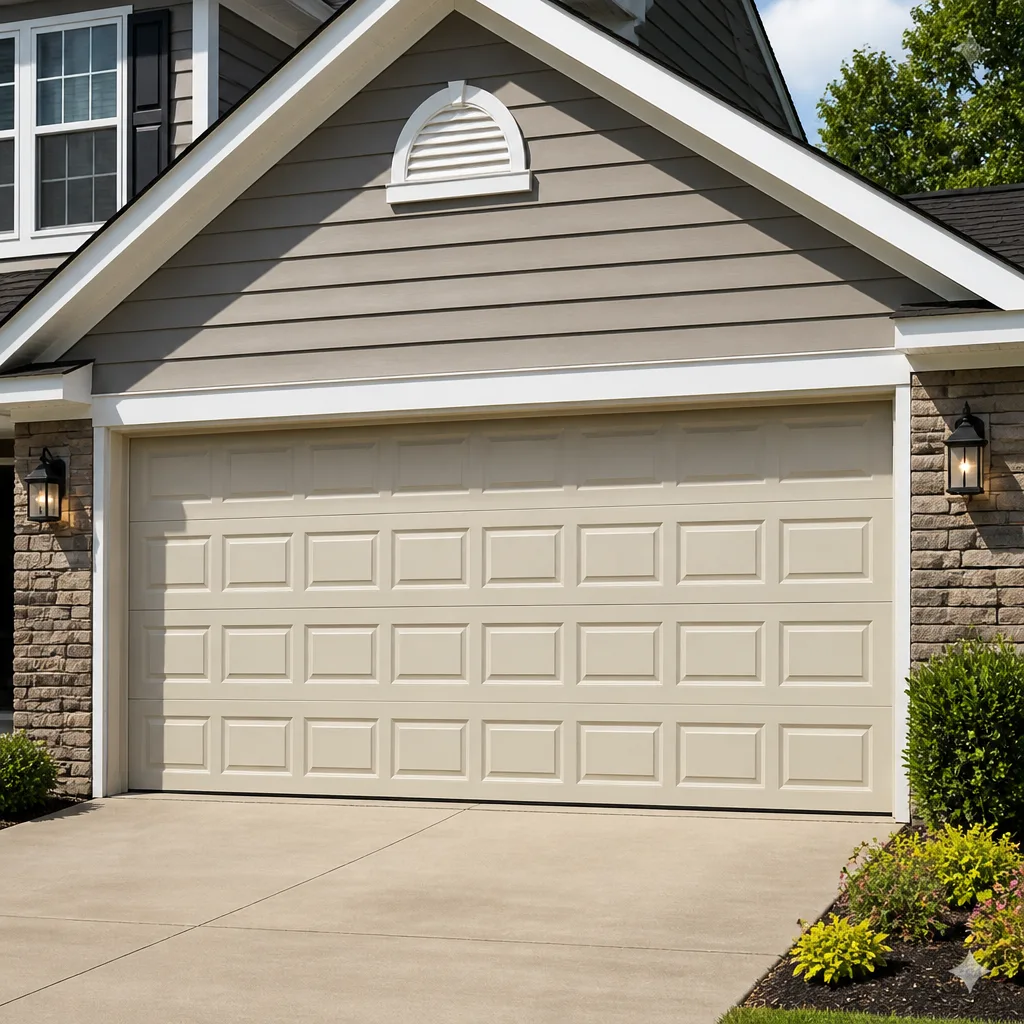 Raised-panel steel
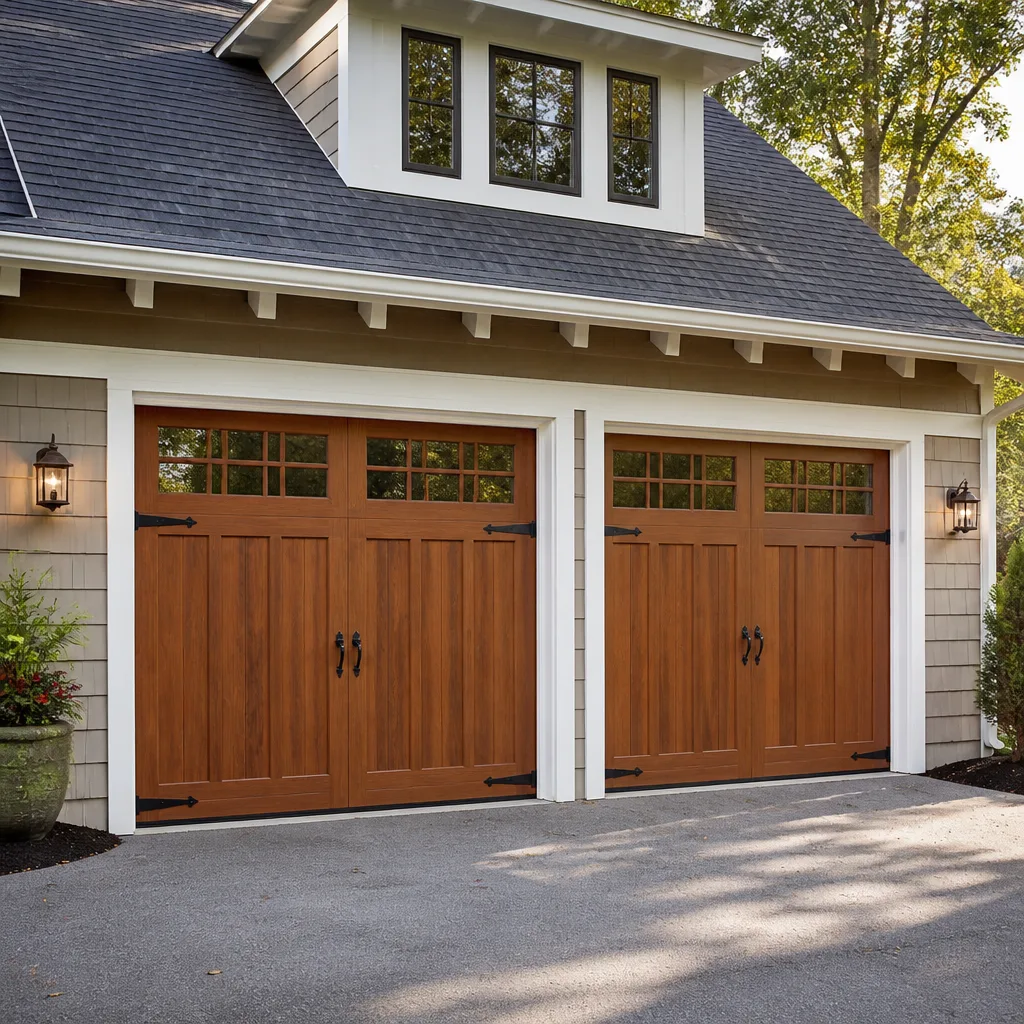 Carriage house
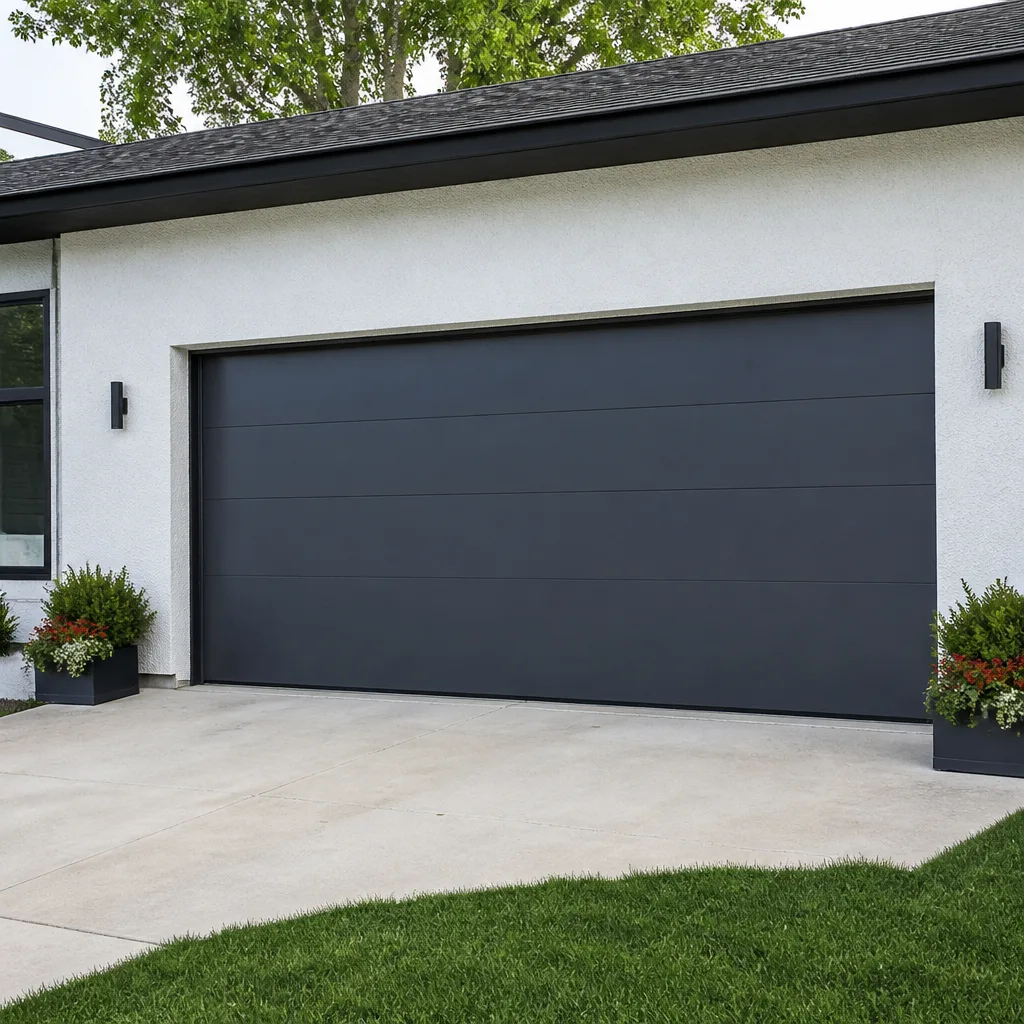 Modern flush
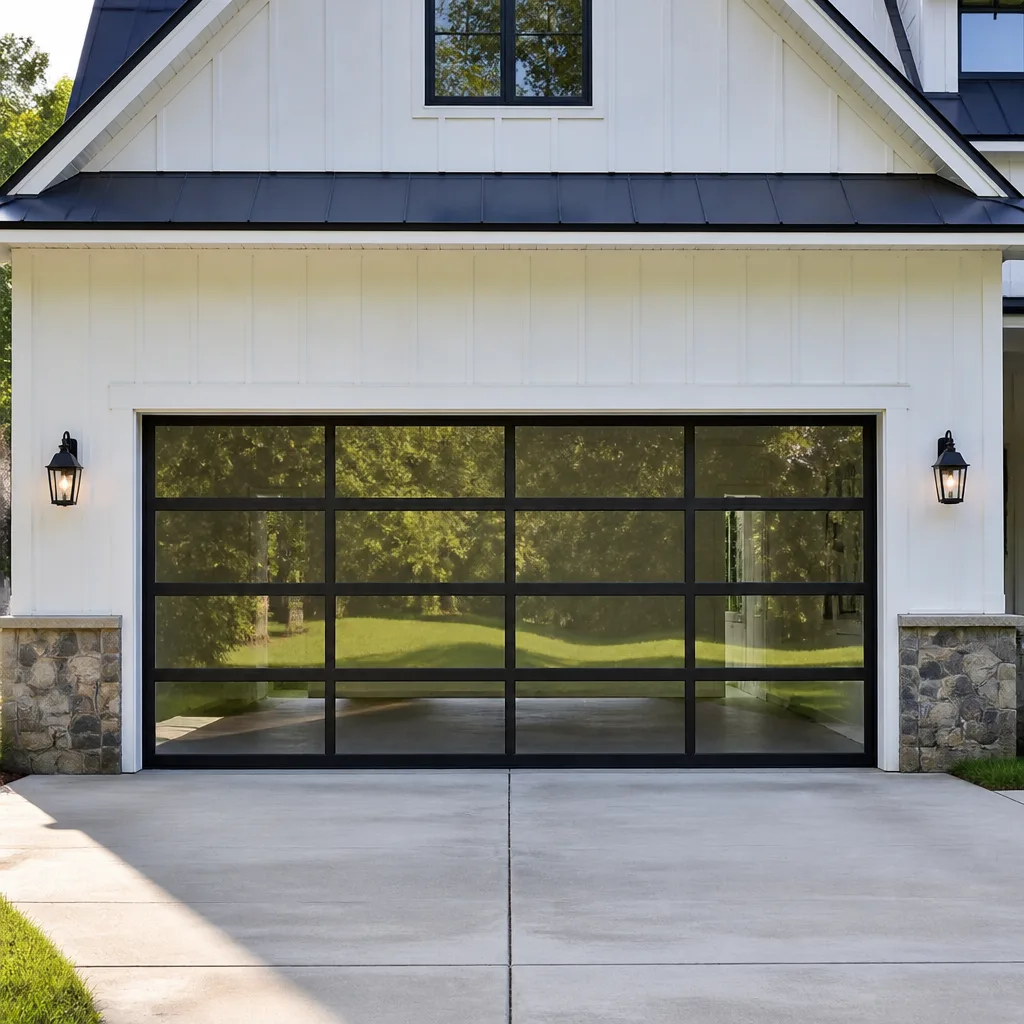 Full-view glass
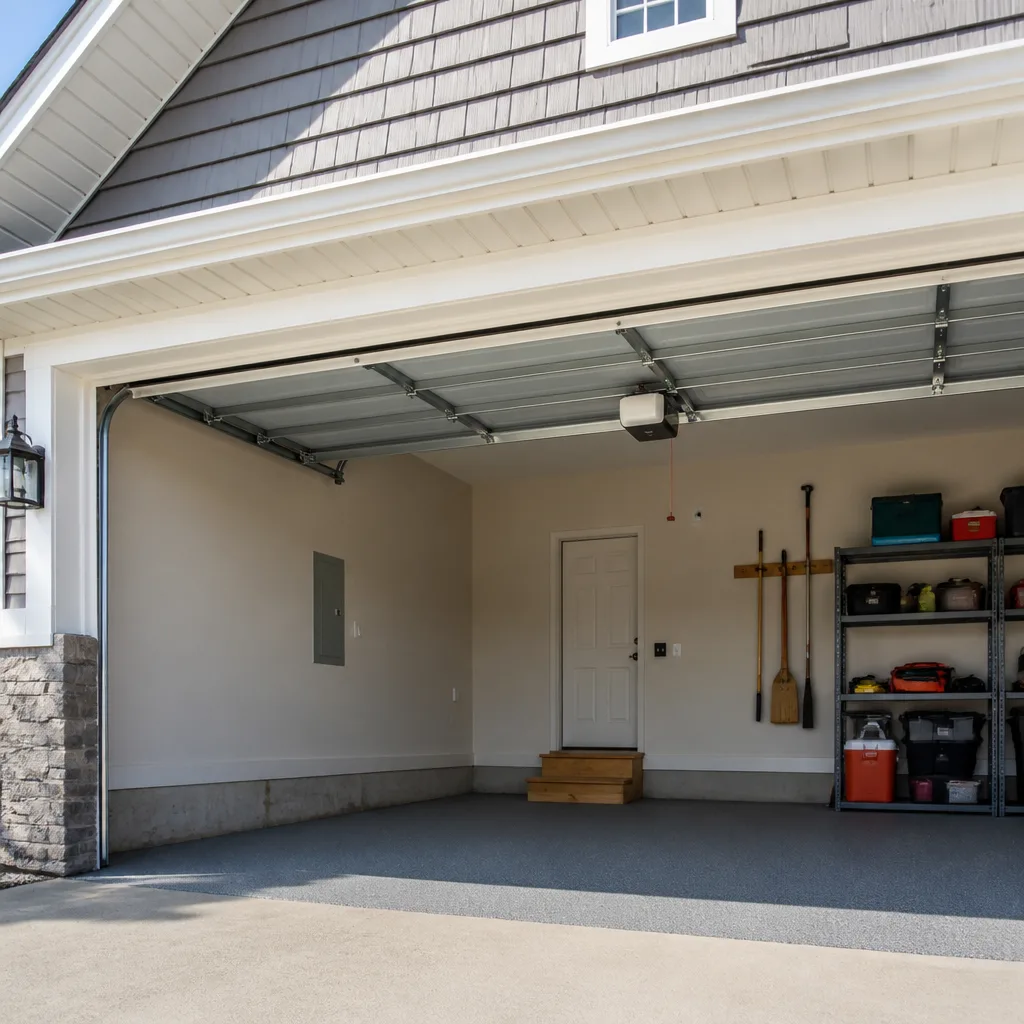 LiftMaster openers
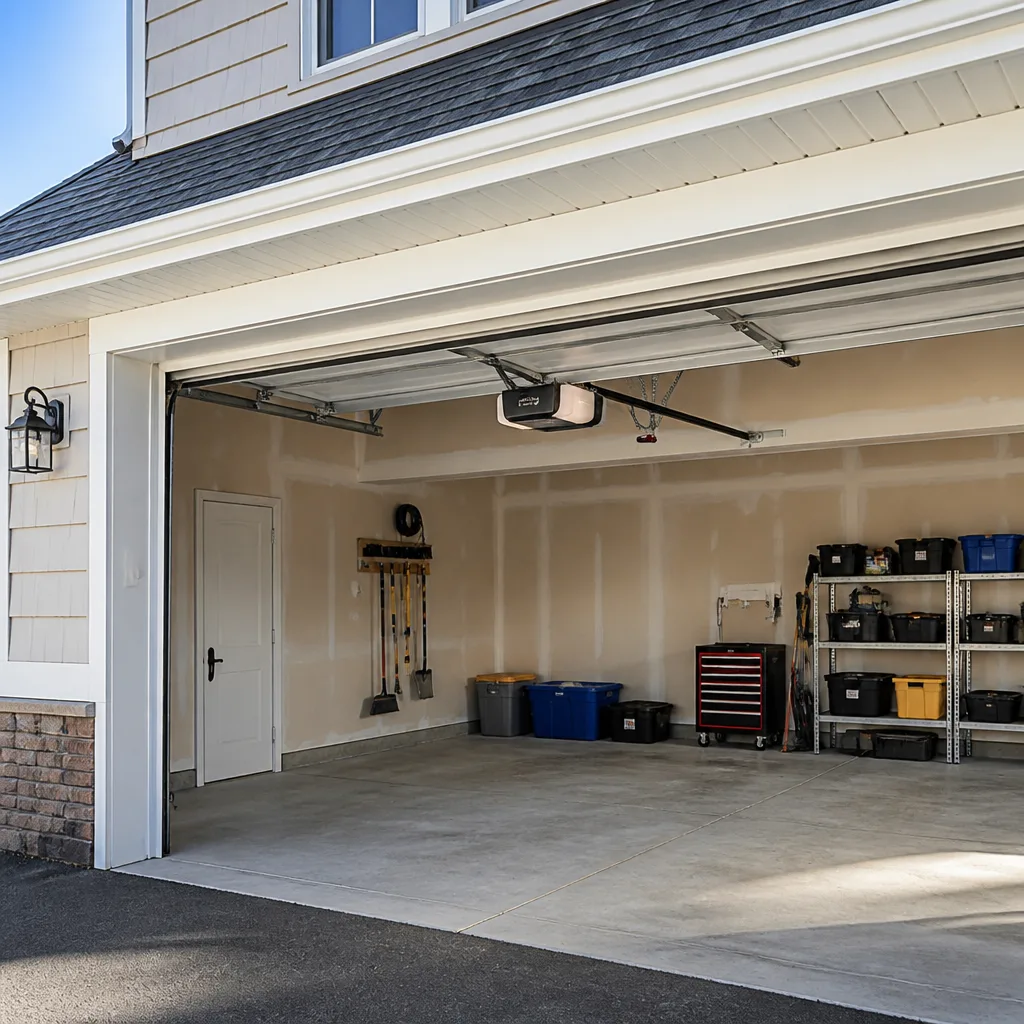 Chamberlain openers
Full 25-point door and opener safety check with every visit - springs, cables, rollers, tracks, and your LiftMaster or Chamberlain opener included
You get a price before we start. It does not change when the pro arrives.
Get your free estimateGarage Door Cost Breakdown: The Suffolk Homeowner’s Reference for 2026
Here’s the problem with garage door cost research: most of what you’ll find online is built on national averages. A torsion spring replacement “typically costs $200-$350,” a new door “runs $800 to $2,500,” and so on. Then a contractor hands you a quote for $480 for the same spring and you’re left wondering whether you’re being taken. In Suffolk, pricing reflects local labor rates, local supplier relationships, and the mix of housing stock here – older homes near the constant-pressure of daily use, newer construction with builder-grade doors. This guide breaks down garage door costs in Suffolk by job type, brand, and urgency, so you can tell a fair quote from a padded one before you sign anything.
Quick Answer
Garage door costs in Suffolk in 2026 depend entirely on the repair, but a few benchmarks hold: spring repair runs $175-$520 for a single torsion spring, standard door repairs fall between $150 and $450, and full door replacement ranges $900-$3,200 depending on material and size. Opener repair is usually $120-$350, and new opener installation is $300-$700. Any written estimate you receive should itemize parts and labor separately – if it doesn’t, ask why.
Styles & brands we work with
- Raised-panel steel
- Carriage house
- Modern flush
- Full-view glass
- LiftMaster openers
- Chamberlain openers
Table of Contents
- The 10 Most Common Suffolk Garage Door Repairs and What They Cost
- Spring Repair: Why the Price Range Is So Wide
- Opener Repair and Replacement Costs
- Emergency Service: When Premiums Are Legitimate and When They’re Inflated
- Repair or Replace? A Break-Even Framework
- Which Brands Cost More in This Market and What You Get for the Difference
- How to Read a Quote: Labor Padding, Upsells, and Parts Substitutions
- Common Mistakes to Avoid
The 10 Most Common Suffolk Garage Door Repairs and What They Cost
Most garage door work in Suffolk falls into a handful of categories. The ranges below reflect what we see in write-ups across the region for typical residential jobs – single-car and two-car doors, standard heights, wood or steel frame construction. Your written estimate sets the final price; these are ranges, not quoted prices.
| Repair Type | Typical Range (2026) | What Drives the Price |
|---|---|---|
| Torsion spring replacement (one spring) | $175-$520 | Spring type, door weight, cycle rating |
| Extension spring replacement (each) | $120-$280 | Spring size, door width |
| Opener repair (board, gear, capacitor) | $120-$350 | Brand, part availability, opener age |
| New opener installation | $300-$700 | Chain vs belt, smart capability, door size |
| Cable replacement | $150-$320 | Single or double door, drum condition |
| Track realignment or repair | $150-$400 | Extent of bend, whether panels need adjusting |
| Roller replacement (set of 10-12) | $150-$280 | Roller type (steel, nylon, nylon-sealed) |
| Panel replacement | $200-$600 | Door brand, panel availability, color match |
| Remote or keypad programming/replacement | $60-$180 | Brand ecosystem, remote type |
| Full door replacement (single) | $900-$2,200 | Material, insulation, brand, disposal |
Double-car doors typically run 30-60% more than a single door for labor and parts because the loads are higher and the hardware is heavier. If your door is 16 feet wide or wider, expect the upper end of most ranges. The one repair where we see the widest spread – and the most confusion about what’s fair – is spring work, which is covered next.
Spring Repair: Why the Price Range Is So Wide
The national average for a torsion spring replacement is often quoted at $200-$350. In Suffolk, the same job can legitimately range from $175 to $520. That’s not because contractors here are gouging – it’s because the spring itself is a variable most cost guides ignore. A standard-cycle spring (rated for roughly 10,000 cycles) costs less than a high-cycle spring (rated for 25,000 or more), and a two-car door needs a heavier spring than a single. The quote you want isn’t the cheapest spring available – it’s the one correctly sized for your door’s weight and cycle life.
Here’s what actually drives the price difference:
- Spring wire gauge and cycle rating. A 25,000-cycle spring can cost two to three times more than a standard 10,000-cycle spring. The labor is nearly identical. Cheaper quotes often default to a lower-cycle spring without telling you.
- Single vs. matched pair. When one torsion spring breaks, the other has been carrying the same load for the same number of cycles. Most spring replacements are done in pairs – and a pair costs roughly twice a single. If you’re quoted a single-spring price and the technician recommends replacing both once he sees the door, the total invoice climbs and you feel misled. Ask upfront whether the quote covers one spring or a pair.
- Door condition. Cables, drums, and center bearings are all tied to the spring system. If a cable is frayed or a drum is scored, replacing the spring alone risks a second failure. The good quotes itemize these; the cheap ones skip them.
Springs are the most dangerous part of any garage door. Torsion springs are under extremely high tension, and extension springs under load have caused serious injuries when they fail. This is not a job to treat as a DIY repair. A trained technician with the right winding bars and a clear understanding of the door’s balance point can do the work safely and get the door back in working order quickly. For a dedicated, itemized breakdown of this specific job, see our garage door spring repair page.
When two springs should be replaced together
If both springs on your door were installed at the same time and one has failed, the other is likely near the end of its cycle life. Replacing one spring and leaving the other is a false economy. Ask any contractor whether the pair is included in the quote. If the answer is vague, that’s a signal.
Opener Repair and Replacement Costs
Opener repair usually costs less than homeowners expect – and replacement often makes more financial sense than repairing a 15-year-old unit on its last legs. The cost depends heavily on brand and whether the unit is a modern smart-home opener or a legacy system.
We work on the full range of openers here in Suffolk, from older chain-drive Genie and Craftsman units in established neighborhoods to newer Chamberlain myQ and LiftMaster systems in recent builds. The parts economics differ:
- Chamberlain and LiftMaster (myQ ecosystem): Parts are the most widely available, so repair tends to be quicker and slightly less expensive. Logic boards and travel modules are usually in stock from regional suppliers.
- Genie and Craftsman: Older models have some parts still available, but specific gears and logic boards can be harder to source. Repair can cost more than replacement when the unit is older.
- Smart-home connection issues: Many “broken opener” calls are actually Wi-Fi or app-connectivity problems, not hard failures. Diagnosis is fast and often resolves without a major repair.
Here’s a rough replacement-vs-repair guide:
- Under 10 years, single component fails (board, gear, capacitor): Repair. The unit has plenty of cycle life remaining.
- 10-15 years, logic board fails: Diagnose first. If the board is available and the motor is strong, repair. If the board is obsolete, replace.
- Over 15 years, repetitive failures: Replace. Older units drain more electricity and lack modern safety features like auto-reverse sensitivity and battery backup.
Our garage door opener repair page has a detailed walkthrough of what diagnosis looks like on the major brands, and our broader garage door repair service covers the door itself. Getting the opener and the door aligned on the same assessment matters, because a new opener on a door with worn rollers will still chatter and stall.
Emergency Service: When Premiums Are Legitimate and When They’re Inflated
A door stuck open is a security exposure. A door stuck closed means the car is trapped. In either case, you call the first company you can reach. This is where some homeowners get quoted numbers that don’t match what the same repair would cost on a scheduled visit. So how do emergency premiums actually work, and when are they justified?
A legitimate emergency premium reflects a few real costs: getting a technician out on short notice, coordinating with the closest available technician, and sometimes pulling a technician off a scheduled job. What a scheduled visit doesn’t have to cover: a 45-minute drive, after-scheduling coordination, or a truck already stocked for another job.
What we would flag as inflated:
- A quote for spring replacement that is 2-3x the scheduled price without a clear explanation. There are real logistics to short-notice visits, but “we’re coming out on a rush basis” shouldn’t triple the invoice.
- A premium that applies to the whole job rather than the dispatch component. If the invoice adds a large “emergency fee” on top of parts and labor for a standard repair, ask for the itemization.
- Parts prices that jump because the work is urgent. The spring costs what it costs whether the technician is on your driveway on a Sunday morning or on a scheduled Monday visit.
What legitimate urgency translates to: a faster response, a technician who has the right parts on hand, and a diagnosis you can trust because the company does this work often. In our experience, the emergency premium usually shouldn’t account for more than a modest share of the total invoice. Our emergency service is a core offering, not an upsell – if the door is stuck, we respond, and the price of getting it back in working order is set by the written estimate before anyone picks up a wrench.
Repair or Replace? A Break-Even Framework
The repair-or-replace question for a garage door comes down to three variables: door age, door condition (panel rust, dents, panel separation), and the ratio of repair cost to a full replacement. There’s no universal rule, but here’s the framework we use with Suffolk homeowners.
If total repair cost exceeds about 40-50% of replacement cost, consider replacement. A door that’s 15-20 years old, showing panel rust or warping, and needs $500+ in repairs is usually a candidate for replacement rather than a second round of repairs. The math gets sharper on higher-end doors.
If the door is under 10 years old and structurally sound, repair is almost always the answer. A single component failure – a spring, a roller set, a panel – doesn’t justify a whole new door. Even a panel replacement or double spring service on a newer door is a small fraction of replacement cost.
If the door is older but well-preserved, repair still wins. A 20-year-old wood door in good structural condition can often be restored with new springs, rollers, and cables for well under the cost of a replacement. The age of the door matters less than the condition when it failed.
Consider insulation and R-value when comparing replacement options. Polyurethane-insulated doors (often specified as Clopay or Amarr) will cost more than uninsulated steel, but if your garage shares a wall with living space or is used as a workspace, that upgrade has real value. The same goes for window panels, carriage-style overlays, and premium colors.
New construction and builder-grade doors
Suffolk has a wide range of housing stock. Builder-grade single doors in newer subdivisions often last 10-15 years before springs and openers need serious attention. That’s not premature – it’s normal cycle life. On those doors, a full replacement is a legitimate consideration when the timing aligns with the repair cost.
Which Brands Cost More in This Market and What You Get for the Difference
Brand matters for two reasons: parts pricing and parts availability. Some brands cost more to repair because the parts come from fewer suppliers, and some openers and doors are easier to service because of it. Here’s what we see across the brands we work on – LiftMaster, Chamberlain, Genie, Clopay, Amarr, Wayne Dalton, Craftsman, and Raynor.
Clopay and Amarr doors. Both are among the most widely specified residential door brands in North America. Replacement panels, color matching, and replacement door pricing tend to be consistent and reasonably available. This is the brand group where quote comparison is most straightforward – you’re comparing apples to apples because the product is well-defined.
LiftMaster and Chamberlain openers. The myQ ecosystem is well-supported with replacement boards, remotes, and accessories readily available from regional suppliers. Repair is usually straightforward. The premium you pay for a LiftMaster over a generic opener buys you better parts availability years down the road – which matters when you’re 8 years in and need a travel module.
Genie and Craftsman. Older units can be trickier because the parts pipeline for legacy models has narrowed. A gear set for an old Craftsman 1/2-hp unit is available, but less common than for a comparable Chamberlain. Where parts are scarce, repair cost can creep up or repair isn’t worth it.
Wayne Dalton and Raynor. Door-specific hardware, panel profiles, and track components. Replacement parts are available, but lead times and prices vary more by model than for Clopay or Amarr. Worth checking availability before committing to a repair rather than replacement.
How to Read a Quote: Labor Padding, Upsells, and Parts Substitutions
A good garage door quote is itemized. It tells you what the part is, what it costs, what the labor is, and what’s not included. A bad quote is a single number. The difference matters because the same repair can be priced in ways that look identical at first glance. Here’s how to read a quote you’ve been handed.
- Ask for the part name and model number. If the quote says “spring replacement” without a part number, ask which spring and what its cycle rating is. A 25,000-cycle spring and a 10,000-cycle spring look identical on a quote that just says “spring.”
- Check whether the quote includes one spring or a pair. This is the single most common source of confusion. If the quote is for one spring and the technician recommends a pair at the door, that’s a price change. Ask upfront.
- Look for labor as a separate line. A quote that lumps parts and labor into one number makes it hard to tell whether the price is being driven by the parts or the labor. Itemized quotes are both easier to verify and easier to compare.
- Check for consumables that shouldn’t be billed as major repairs. Lubricant, small fasteners, and shop rags are normal overhead. If a quote is itemizing those as major line items, ask what’s going on.
- Compare parts premiums against brand value. A slightly higher price for a spring or opener with a better cycle rating or a broader parts pipeline is usually worth it. A “premium” price for the exact same part specification is not.
- Ask what’s excluded. A quote that doesn’t mention cables, drums, or bearings may be assuming those are fine. If they aren’t, you’ll get a revised quote on the day. Ask the technician to check and confirm in writing.
One thing a good quote won’t do: charge more for coming out on a Sunday. The written estimate sets the price. If your quote grows after the technician has been in the driveway for 20 minutes, ask for a second opinion. The repair pieces don’t change with the time of day, and a fair contractor will explain what changed and why before the work begins.
Common Mistakes to Avoid
- Choosing the cheapest quote without reading the line items. A $175 spring sounds like a win until you discover it was a 10,000-cycle spring on a 7-foot high double door that needed a 25,000-cycle unit. The most expensive quote wasn’t for the best spring; the cheapest quote rarely was either.
- Assuming a pair is included. If a quote doesn’t say “pair,” it’s probably one spring. The technician arrives, points out that the second spring is at the same wear stage, and the total climbs. Ask before the job starts.
- Mixing up emergency pricing and standard pricing. Emergency service should reflect a modest dispatch premium, not a multiplier on the whole invoice. If the Sunday quote is triple the weekday quote for the same repair, get a second estimate.
- Failing to ask about cycle rating on springs or MyQ smart-openers if you’re replacing an opener. A replacement opener without the correct travel limits and force settings will eventually damage the door and the operator. Confirm the installer will program and calibrate the new unit.
- Skipping the panel and door inspection on a spring repair. A spring that failed due to a bad drum or a bent track will fail again on the new spring. A good contractor will inspect the full door and flag what’s likely to fail next.
- Assuming a new door always costs more than the repairs you’ve done. Three $400 repairs in two years is $1,200; a full replacement might be $1,500. The math isn’t always obvious, and we’ve seen homeowners surprised in both directions.
- Treating a garage door as a DIY project when it isn’t. Springs, cables, and drum assemblies are under high tension. Even an experienced DIY homeowner can be seriously injured. There are garage door parts and repairs that are safe to tackle; springs and cables are not among them.
See the difference
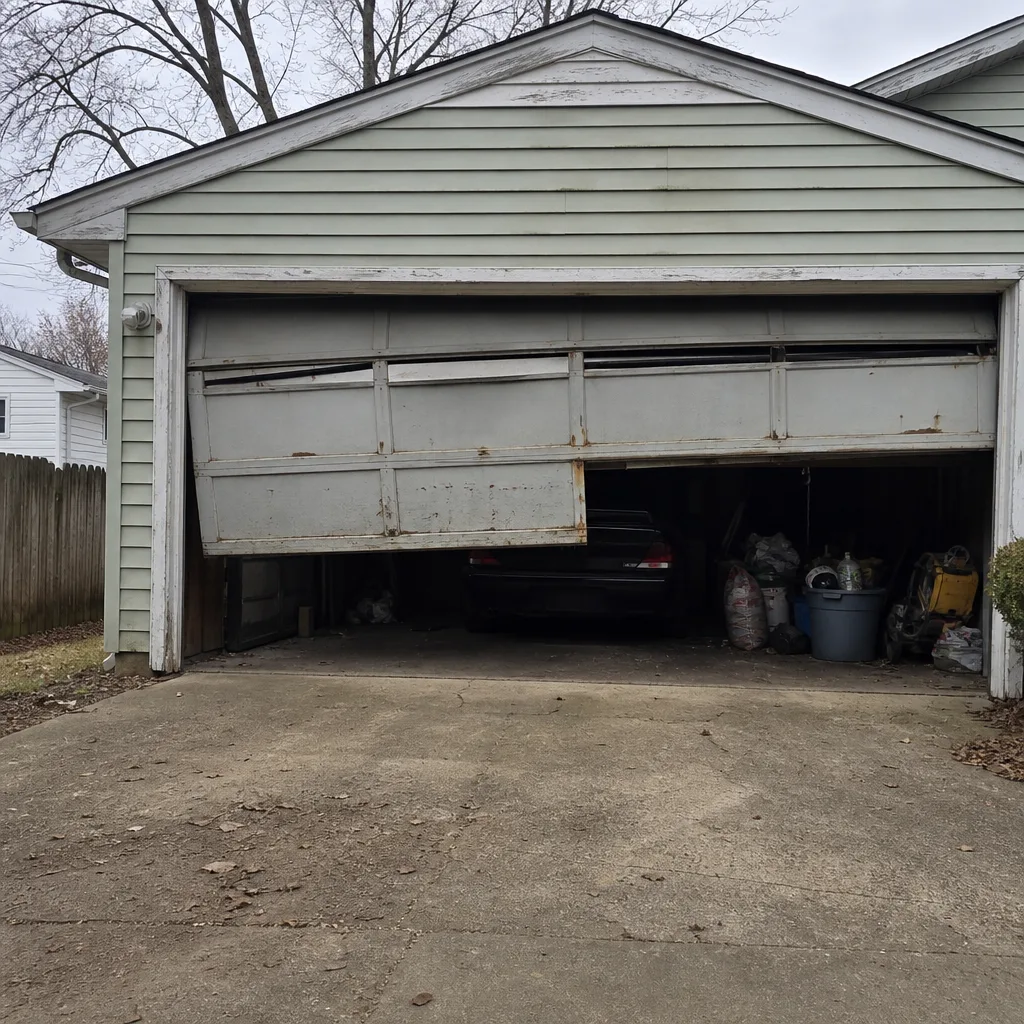 Before
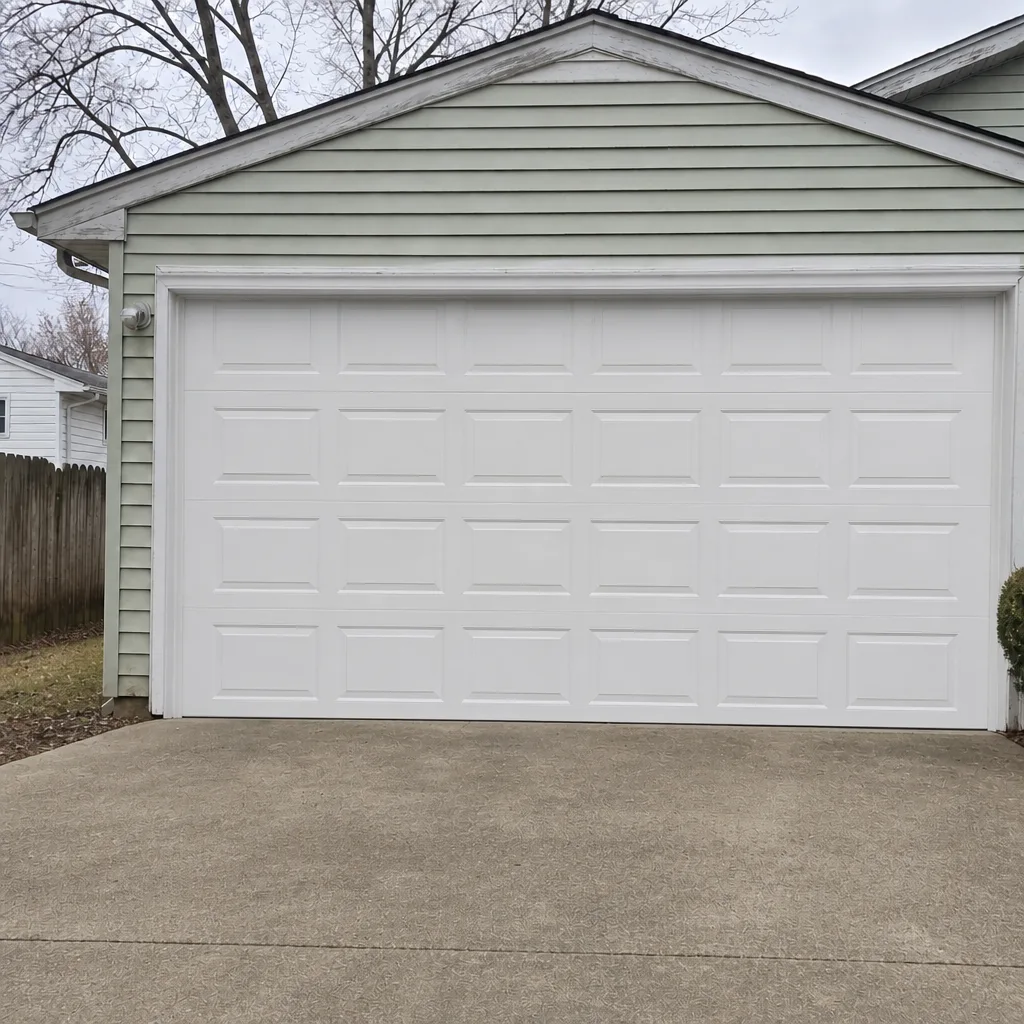 After
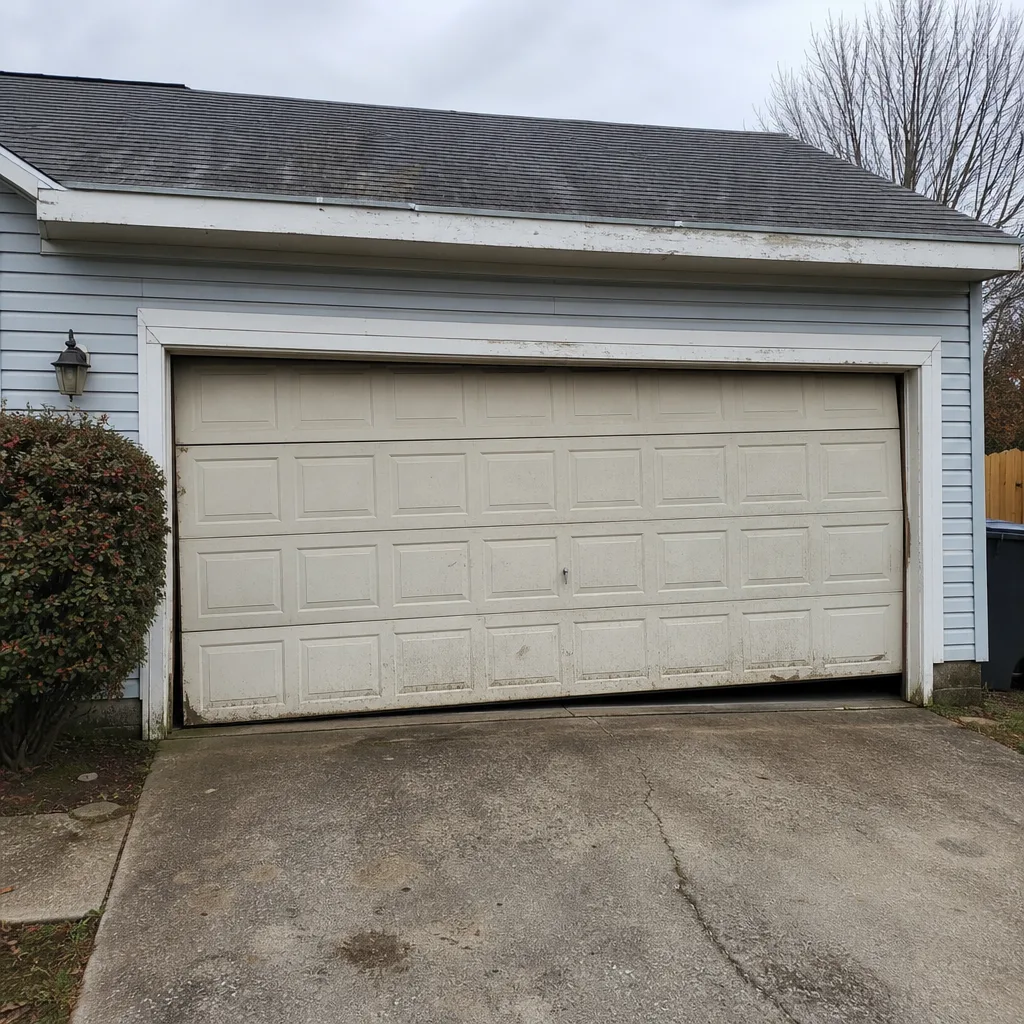 Before
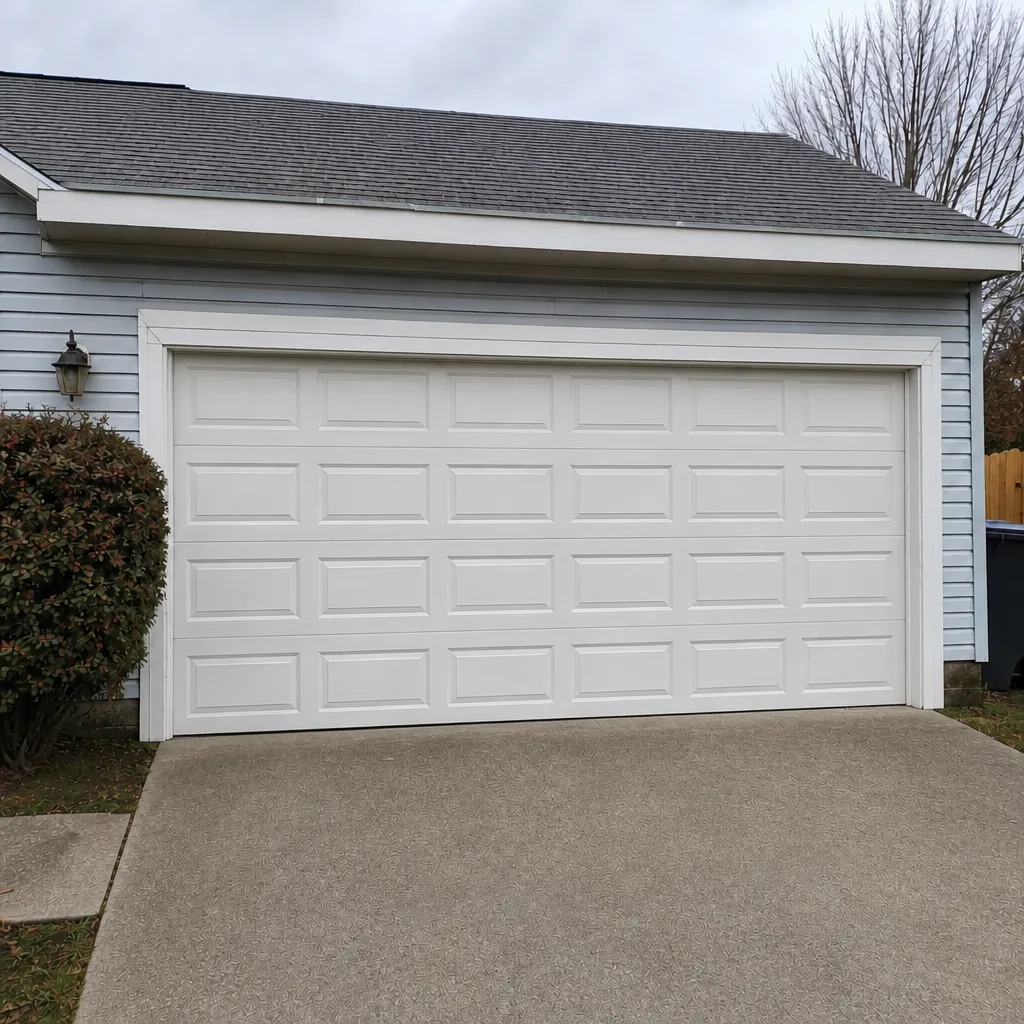 After
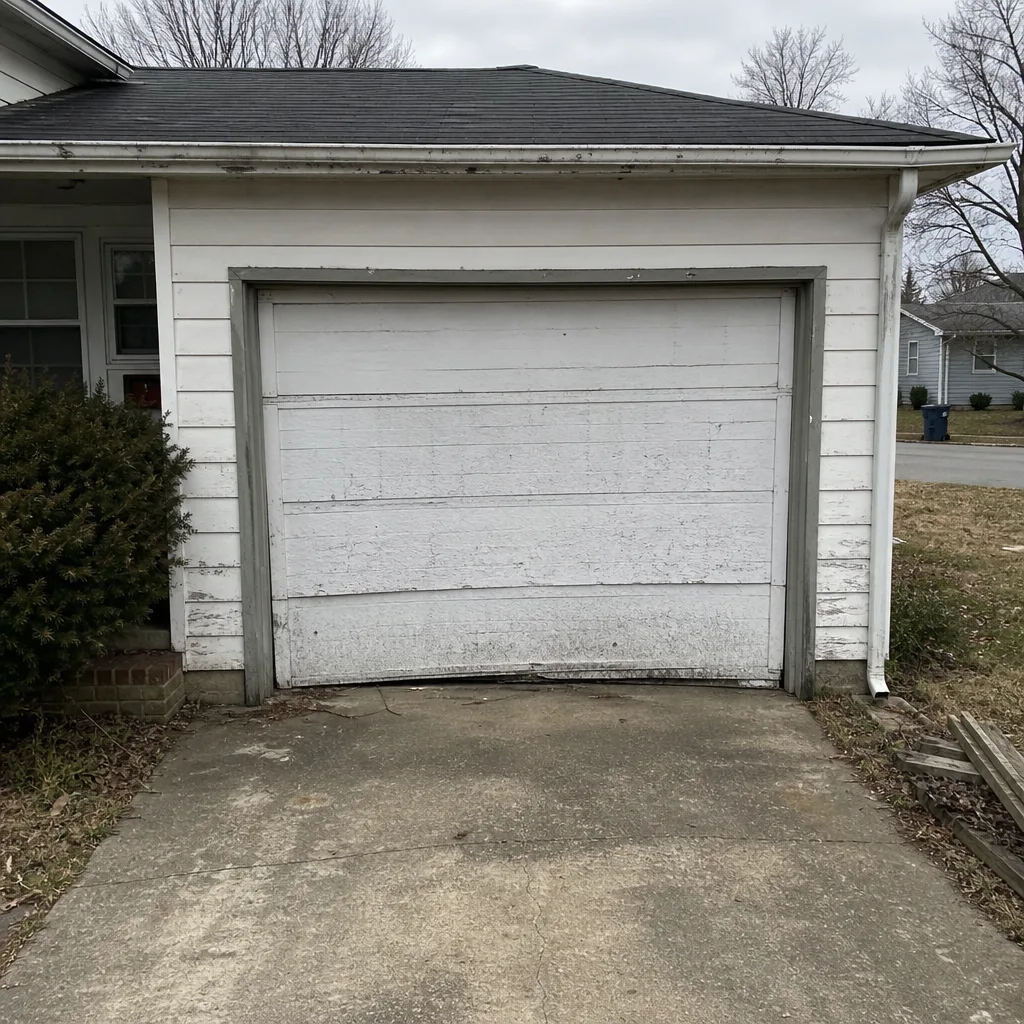 Before
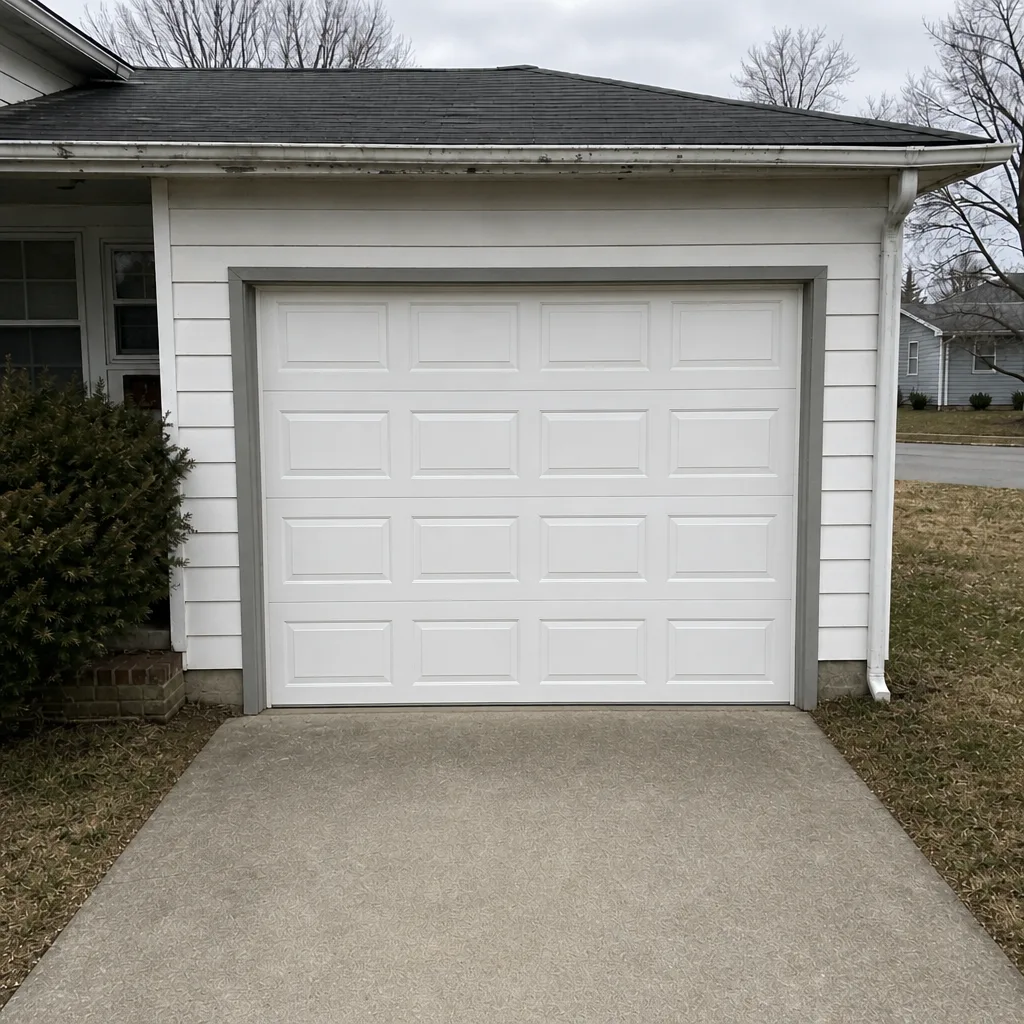 After
When to Call a Professional
Call a professional if any of these are true: the door won’t open or close evenly, the door is stuck open or stuck closed, a spring is visibly broken or the door won’t lift, the opener runs but the door doesn’t move, a panel is cracked or the door is off its tracks, the opener makes grinding or humming sounds without moving the door, or you’re considering a new door and want a measure and quote before deciding. Springs, cables, and openers all involve forces that are not safe to work on without proper training. Suffolk Garage Door Repair Pros offers free estimates in Suffolk – call (855) 894-0378 for a written estimate and a clear plan.
Frequently Asked Questions
Most garage door repairs in Suffolk run between $150 and $450 for a standard single-spring or opener job. Full door replacement runs $900 to $3,200 depending on material, size, and insulation. The written estimate you receive after a measure or diagnostic visit sets the final price. Call (855) 894-0378 for a free estimate.
It’s usually worth replacing both. If the springs were installed together and one has failed, the other is at the same wear stage and often fails within days or weeks. Replacing only one means a second service call for the same job. Ask whether the quote covers a pair before you approve it. Call (855) 894-0378 to talk through your specific door.
Yes for most repair calls. We answer the phone 24/7 and dispatch technicians for same-day repair in Suffolk. Fast dispatch runs from 7am to 7pm, Sunday through Friday, and a call outside dispatch hours is booked into the next opening. Call (855) 894-0378.
It shouldn’t, if the original quote was itemized. A good estimate is built on parts and labor that the technician can scope over the phone and confirm visually on arrival. Small adjustments may happen if the technician finds additional damage – frayed cables, a worn drum – but the original price should be the benchmark. Call (855) 894-0378 and ask for a written estimate.
The technicians servicing your door are licensed and insured as required by state law for garage door work. If you’d like to see documentation, ask before the technician arrives. Our technicians have up to 9 years of experience working on the major door and opener brands. Call (855) 894-0378 to schedule.
Standard single-car doors installed run $900 to $2,200; double-car doors run $1,400 to $3,200 depending on material, insulation, and brand. Clopay and Amarr doors are widely specified and often the most straightforward to price. We handle the full measure, quote, and installation, and we’ll confirm the written price before any work starts. Call (855) 894-0378 for a free measure and quote.
The Bottom Line
Garage door costs in Suffolk in 2026 are less about national averages and more about the specific job: the spring’s cycle rating, whether the quote covers one or both springs, the opener brand’s parts availability, and whether the quote is itemized. The most expensive quote you receive isn’t automatically the safest choice, and the cheapest rarely is either. Read the line items, ask whether the pair is included, confirm the cycle rating on your spring, and compare the part specification rather than just the total. The one repair to never treat as DIY is the spring and cable. That’s where a trained technician earns their invoice. If you’re ready for a written, itemized quote, call (855) 894-0378 for a free estimate from Suffolk Garage Door Repair Pros.
For related services, see our Suffolk Garage Door Repair Pros homepage for a full overview of what we handle, and our garage door repair page for a deeper walkthrough of the repair process. For spring and opener specifics, our garage door spring repair and garage door opener repair pages cover brand-level detail on parts, cycle ratings, and replacement timelines.
Written by the team at Suffolk Garage Door Repair Pros.