
Last updated November 22, 2026
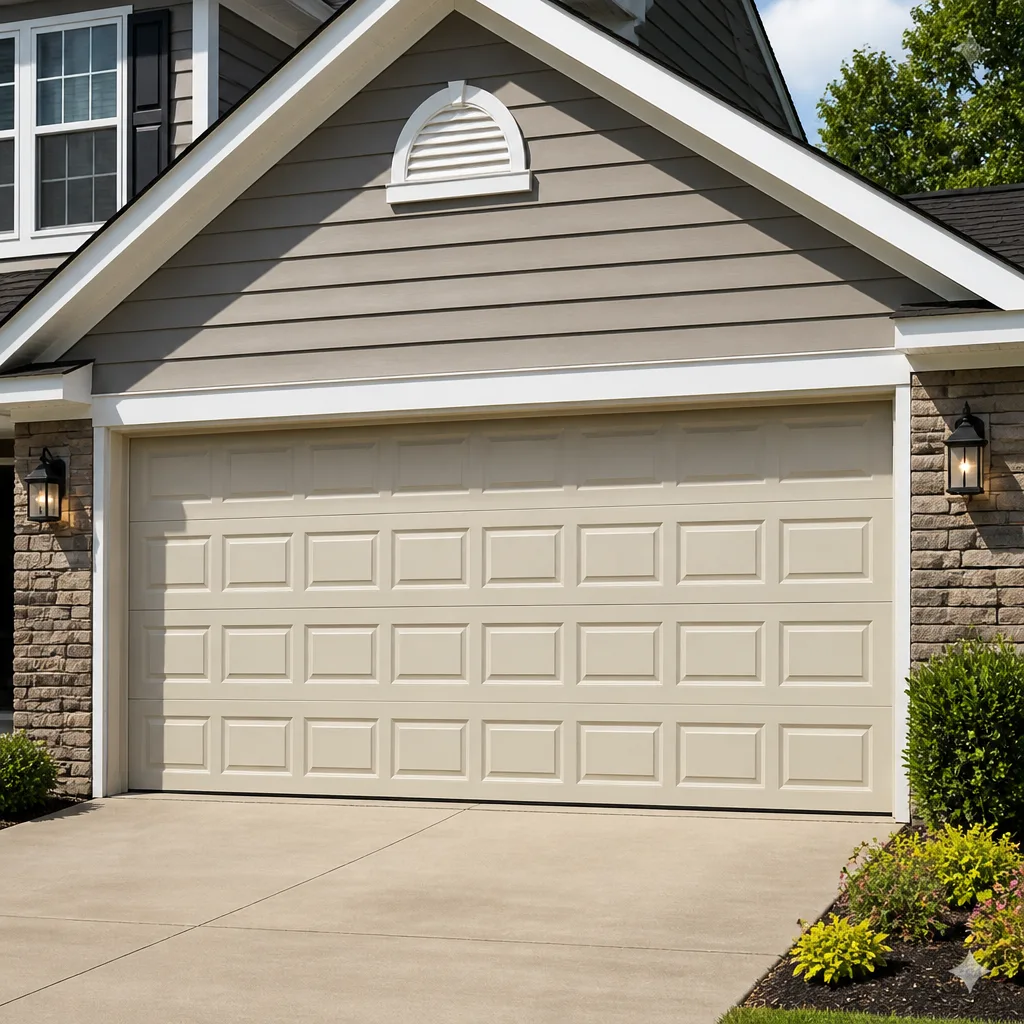 Raised-panel steel
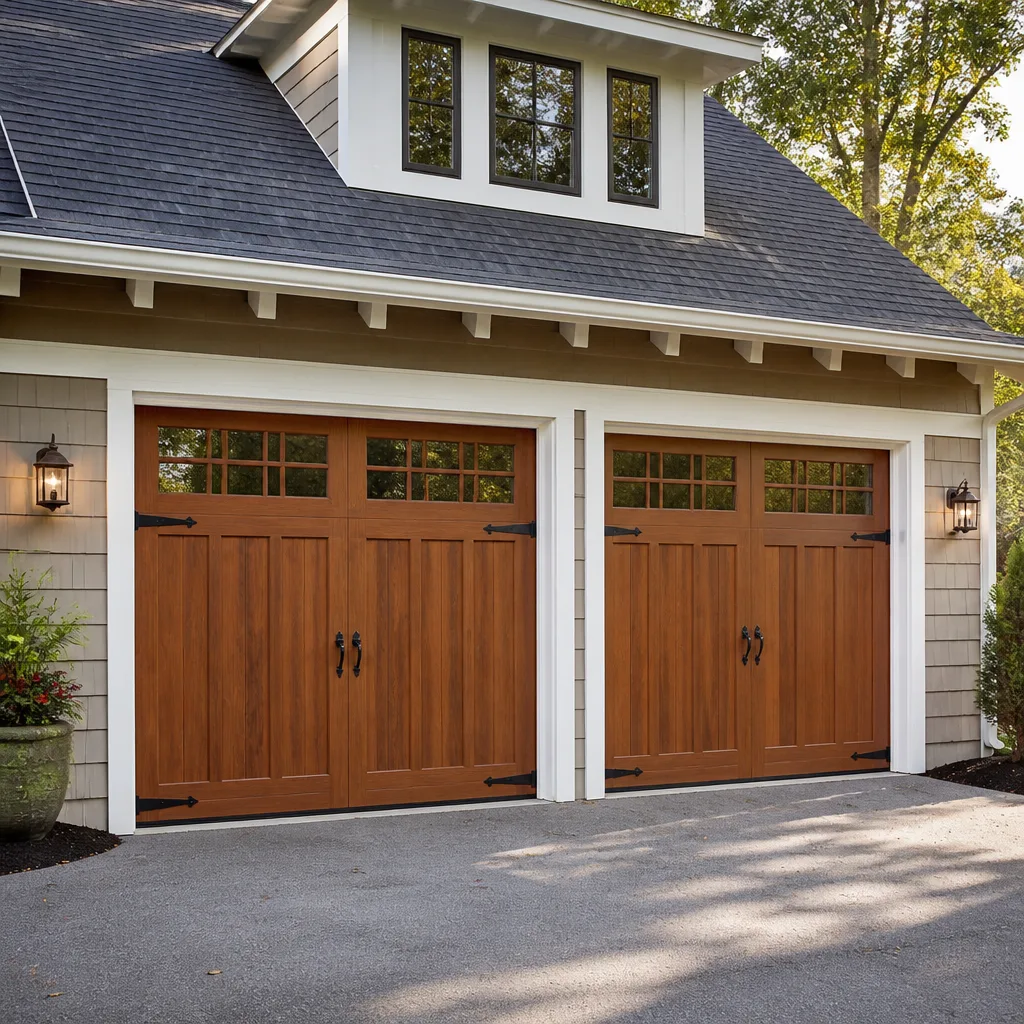 Carriage house
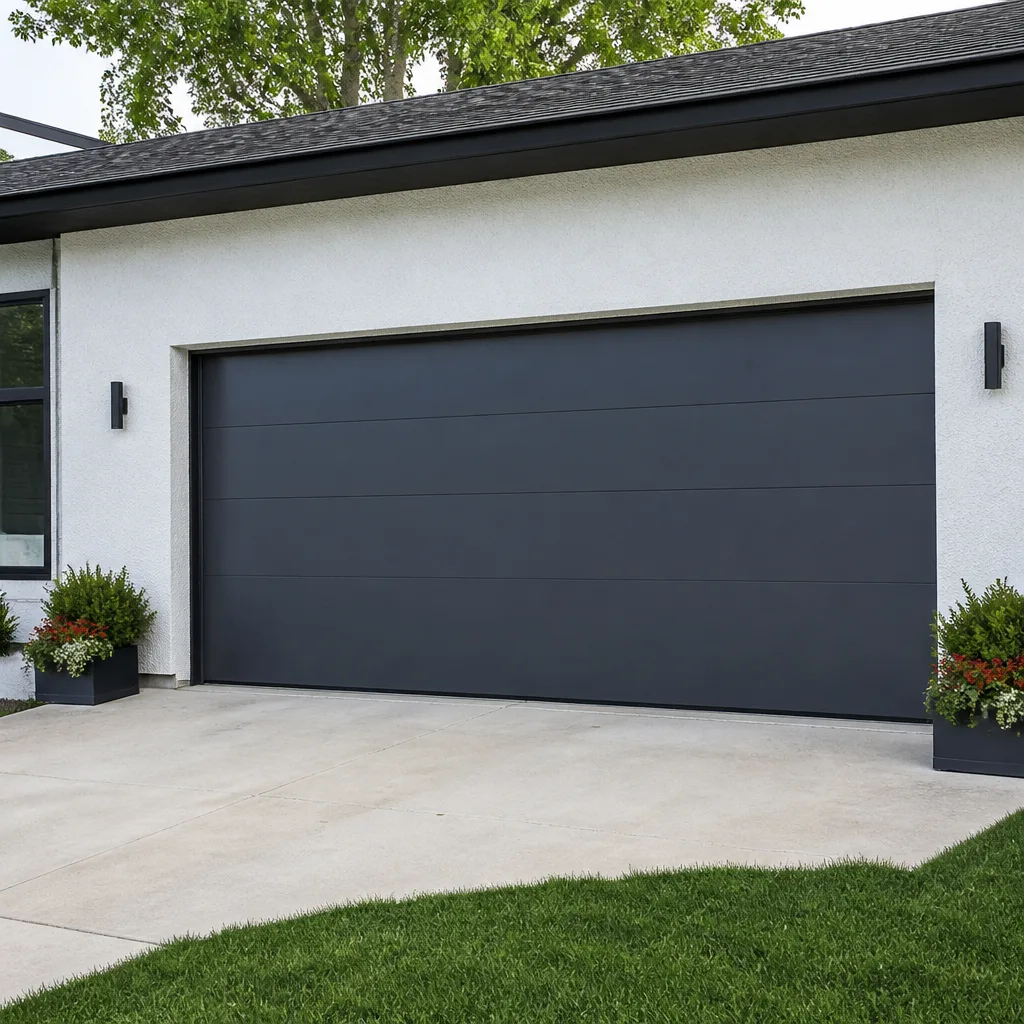 Modern flush
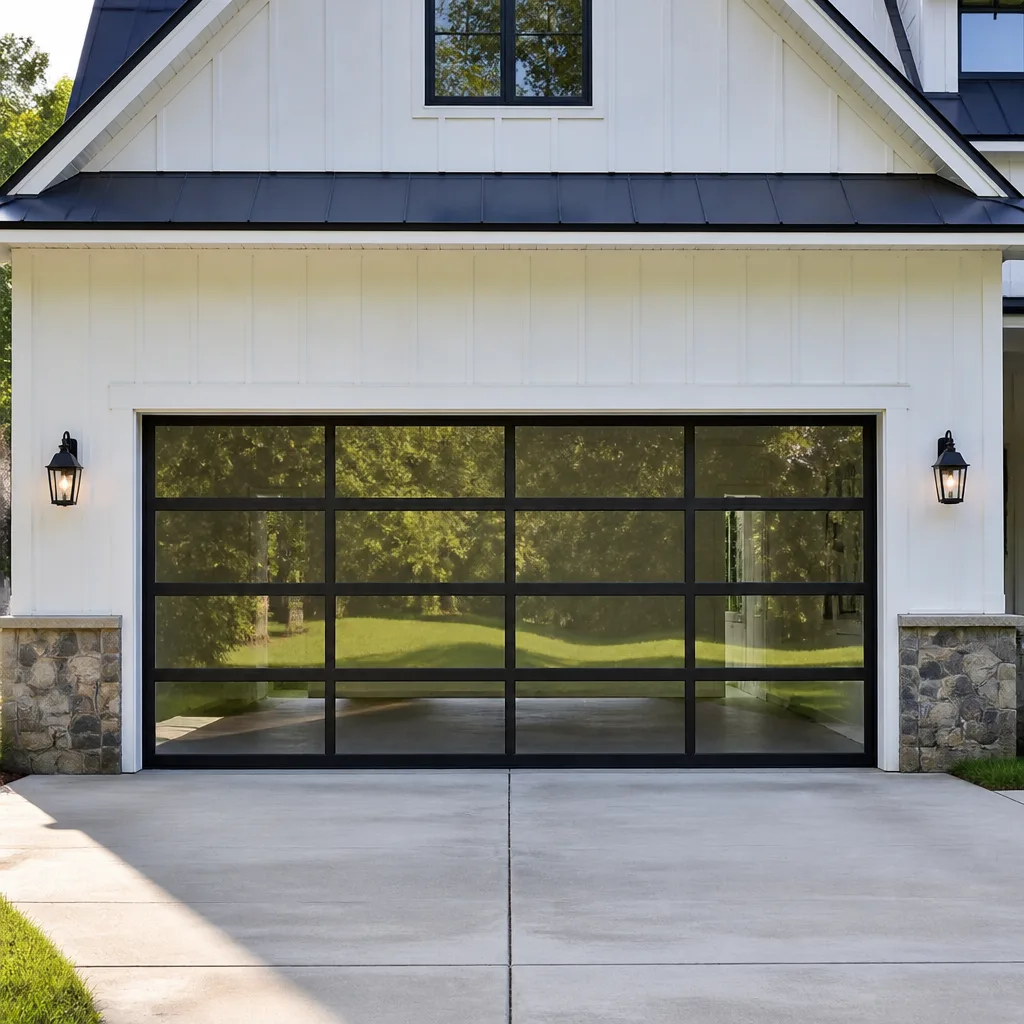 Full-view glass
 LiftMaster openers
 Chamberlain openers
Full 25-point door and opener safety check with every visit - springs, cables, rollers, tracks, and your LiftMaster or Chamberlain opener included
You get a price before we start. It does not change when the pro arrives.
Get your free estimateGarage Door Permits, Codes & Inspections in Suffolk, VA: What You Need to Know
Most Suffolk homeowners assume that swapping a garage door is a simple product replacement, the kind of job that needs nothing more than a delivery and a few hours of labor. That assumption is where trouble starts. The scope of work decides whether a permit is required, not the fact that the door swings on its own tracks. A straight like-for-like replacement often sits below the threshold. Anything that changes the opening, the structural framing, the header, or the load path usually crosses into permit territory, and the person who signs off on that work carries the responsibility. This guide walks through when Suffolk requires a permit, how the process actually runs, how inspections get scheduled, and why skipping the paperwork can complicate a future sale or an insurance claim. If you own a home in Suffolk, this is worth ten minutes of your attention.
Quick Answer
In Suffolk, VA, a permit is typically required when garage door work involves structural changes to the opening, the header, the framing, or the electrical circuit feeding an opener. A simple like-for-like replacement of the same size door with no structural modification is often treated as exempt. When in doubt, call Suffolk’s building department and describe the exact scope, then have the written answer on hand before work begins.
Styles & brands we work with
- Raised-panel steel
- Carriage house
- Modern flush
- Full-view glass
- LiftMaster openers
- Chamberlain openers
Table of Contents
- When is a garage door permit required in Suffolk, VA?
- What does the Virginia Uniform Statewide Building Code actually say?
- Like-for-like replacement vs. structural modification
- How Suffolk’s permit process works in practice
- How inspections get scheduled and what inspectors look at
- How unpermitted work affects insurance claims and real estate transactions
- What a contractor who pulls permits for you should provide
- What to do if a contractor refuses to pull a permit
When is a garage door permit required in Suffolk, VA?
Garage door permits in Suffolk fall into a practical gray zone. The building department isn’t looking at the door itself. It’s looking at what the work does to the structure around the door. A same-size swap of a door and its track hardware, done with the existing framing untouched, frequently lands in the exempt category. But a homeowner who widens an opening, reframes a header, replaces a sagging header over the door, changes from a single bay to a double bay, or adds or relocates a new opener circuit usually does need a permit.
The triggers homeowners most often miss:
- Changing the height or width of the opening by even a few inches, which alters the header load.
- Replacing a structural header because the old one has sagged or cracked.
- Framing a new garage door opening in an existing wall where there wasn’t one.
- Adding a new electrical circuit for an opener, particularly in a detached garage.
- Upgrading from a manual door to a powered opener where no circuit exists.
- Work done as part of a larger renovation where the garage door is included on a master permit.
If any of those apply, treat the job as permitted work and build the timeline around that assumption. For homeowners who just need the door back in working order, the answer is usually simpler: garage door repair in Suffolk that restores existing hardware typically needs no permit at all.
What does the Virginia Uniform Statewide Building Code actually say?
Virginia regulates construction at the state level through the Virginia Uniform Statewide Building Code, which local jurisdictions like Suffolk enforce. The code sets the baseline for what constitutes construction, alteration, repair, and replacement, and it establishes when a building permit is required versus when a minor repair is exempt. The document doesn’t have a line item that says “garage doors” in big bold letters. Instead, the permit requirement turns on whether the work is a repair or an alteration, and whether the alteration affects the structural, electrical, or life-safety systems of the home.
That’s why the answer varies by scope. A spring replacement, an opener repair, or swapping a bent track is a repair. A new opening, a changed header, or a widened bay is an alteration. The code treats those two categories differently, and Suffolk’s building department applies the code to the specific scope on the application.
A few practical points to keep in mind:
- The code is statewide, but enforcement is local. Suffolk’s building department is the office that issues the permit and sends the inspector.
- Repair of an existing door, opener, track, or spring generally falls outside permit requirements because the structure isn’t changing.
- Replacement of a door in the same opening, with the same dimensions, is often treated as a repair with no structural change.
- Any change to the header, framing, or opening geometry is an alteration and typically needs a permit.
- Electrical work for a new opener circuit is regulated under the electrical provisions and typically needs its own permit or coverage on the same application.
We can’t quote code sections or local amendments from memory, and neither should anyone else. The correct move is always to call the Suffolk building department, describe the job in plain language, and get the answer directly from the office that will issue the inspection. A five-minute phone call ends the guessing.
Like-for-like replacement vs. structural modification
Like-for-like replacement means the new door goes into the same opening, at the same height, at the same width, into the same framing, with the same or an equivalent door model. It’s a swap of a product for a comparable product. Most building departments, Suffolk included, treat that work as a repair rather than construction, and repairs are generally exempt from permit requirements.
Structural modification is the opposite. The opening changes. The header changes. The framing around the opening changes. A door of a different size, weight class, or wind rating may require reinforcing or replacing structural members. Once the structure around the opening is touched, the job generally moves into permit territory.
Here’s how the two categories usually break down:
- Often exempt (like-for-like): Replacing a door of the same size and weight class in the same opening with no framing changes. Replacing an opener with a comparable unit on the existing circuit. Repairing springs, cables, rollers, or tracks.
- Usually permitted (structural): Widening or raising the opening. Replacing a damaged or undersized header. Reframing the rough opening. Adding a new opening in a wall. Running new electrical for an opener where none existed.
- Depends on scope: Upgrading to a heavier door (which may stress the header), switching from extension to torsion springs, or reinforcing the framing for wind-load requirements on a specific opening.
If you’re replacing a door on a home built decades ago and going with a modern model from a brand like Clopay, Amarr, or Wayne Dalton, the door itself is often heavier and better sealed than the original. That alone doesn’t require a permit, but if the installer recommends header reinforcement to handle the new weight or a heavier spring set, that part of the work does. Ask which portion of the job triggers the paperwork so the estimate reflects it.
Homeowners comparing door-to-door replacement and full installation will get better information from a garage door spring repair visit if the existing door and track are still serviceable. In our experience, plenty of Suffolk homeowners who thought they needed a new door really needed a spring and a tune-up. That’s a repair, and it stays out of the permit conversation.
How Suffolk’s permit process works in practice
Suffolk’s permit process is routine once you know the order of operations. The building department takes an application that describes the scope, the address, the contractor who will do the work, and the value of the job. Supporting documentation may include a simple plan showing the opening, the header, the framing, and the door specification, plus manufacturer installation instructions for the door being installed. Small residential jobs often don’t require stamped drawings, but the application does need to describe the scope clearly enough for the reviewer to understand what’s changing.
The sequence typically runs like this:
- Determine the scope. Decide whether the job is like-for-like or structural. If structural, proceed to the next step.
- Call the Suffolk building department. Describe the work and ask what the application requires for this specific scope.
- Submit the application. The contractor licensed to do the work usually submits it; a homeowner can also apply as an owner-builder in many cases.
- Pay the permit fee. Fees are set by Suffolk and scale with the value of the job. Ask the department directly for the current fee at the time you apply.
- Wait for review and issuance. Straightforward residential applications often clear review in a matter of days, sometimes faster, but the timeline depends on the department’s current workload and the completeness of the application.
- Schedule the inspection. Once the work is done, an inspector visits to verify the scope was completed as permitted.
- Close out the permit. After a passing inspection, the permit is closed and becomes part of the home’s record.
The single biggest source of delay is a scope description that leaves the reviewer guessing. If the application says “replace garage door” and the work actually involves reframing an opening, the reviewer will come back with questions and the job stalls. Clear scope, clear plan, clear schedule.
Suffolk’s climate adds its own pressure to the schedule. Summer humidity and the strong thunderstorms that roll through Hampton Roads mean a garage door that’s stuck open becomes a problem the same day, and homeowners naturally want it fixed immediately. That’s why emergency work is usually repair, not replacement. Replacement is a measured, ordered, scheduled job, and the honest version of that conversation includes the permit timeline when one applies. When a door fails and the fix is mechanical rather than structural, garage door opener repair in Suffolk can often be handled the same day.
How inspections get scheduled and what inspectors look at
Inspection timing in Suffolk follows the permit. Once the work is complete, the contractor or the homeowner requests the inspection, and the building department schedules the visit. The inspector’s goal isn’t to grade the aesthetics. It’s to verify that what was permitted is what was built. If the permit said “replace header and same-size door,” the inspector looks at the header and the door. If the scope included a new opener circuit, the electrical inspection covers the wiring and the connection.
What inspectors typically check on garage door work:
- That the opening dimensions match the permitted scope.
- That the header and framing are sized and installed as described.
- That the door is installed per the manufacturer’s instructions, including the emergency release and any safety features.
- That the opener’s safety reverse system functions, where an opener is part of the scope.
- That any electrical work is done to code and covered by the right permit.
What inspectors don’t do: they don’t adjust springs, they don’t tune the opener, and they don’t fix anything that’s off. If a component fails the inspection, the contractor comes back, corrects it, and the inspection is rescheduled. This is why hiring someone who pulls the permit themselves matters. The person responsible for the work should also be the person standing behind it at inspection.
Homeowners ask us often whether an inspector will flag a door that’s the wrong color or a dented panel. The answer is no. Those aren’t within the scope of a building inspection. The inspector cares about the structural and safety items. Aesthetics, brand choice, and window style are the homeowner’s call.
How unpermitted work affects insurance claims and real estate transactions
Unpermitted garage door work creates complications in two places homeowners least expect: insurance claims and real estate closings. When a homeowner files a claim after a storm, a sagging header failure, or an opener-related electrical issue, the insurer may ask for documentation of work done on the home. If the garage door replacement or framing change was permitted, the permit record and final inspection serve as proof that the work was done correctly. If it wasn’t, the insurer may treat the work as a possible source of the loss. That doesn’t automatically mean denial, but it can absolutely become part of the conversation.
On the real estate side, home inspectors flag missing records routinely. When a buyer’s inspector sees a garage door replacement or an added opening and can’t find the permit record at the city, the buyer’s agent will ask questions. Those questions can delay a closing, force a retroactive permit application, or push the seller to negotiate. The homeowner who pulled the permit has a paper trail. The homeowner who didn’t has a problem.
Practical ways to protect yourself:
- Keep the permit and the final inspection record with your home documentation if the job required one.
- Photograph the opening and header before and after a structural change so there’s a visual record.
- If you bought the home recently and can’t find records for a past garage door replacement, ask Suffolk’s building department whether a permit was pulled for the address.
- Before you list, order a quick permit history check on your own property so you’re not surprised by what the buyer’s inspector finds.
- Insist that any contractor who performs structural work on your garage opening pulls the permit and shares the inspection result with you.
The garage door is one of the most visible elements of any home at a walk-through. A recent replacement with no paperwork behind it raises a question every time. A recent replacement with a closed permit invites a nod and moves the conversation along.
What a contractor who pulls permits for you should provide
A contractor pulling a permit on your behalf takes on a set of obligations. The permit record in the city’s system carries their name. If the work fails an inspection or never closes out, that follows the contractor, not just the homeowner. That’s why the answer to “will you pull the permit?” tells you a lot about how a contractor operates.
A contractor who pulls permits for you should provide, at minimum:
- A copy of the permit application and the issued permit, so you have the record in hand.
- A clear written scope that matches what’s on the permit, so the inspection and the work line up.
- Confirmation that the inspection has been scheduled and completed.
- A copy of the final inspection sign-off and the closed permit, for your records.
- Access to a licensed contractor’s contact that appears on the permit, in case you ever need to reference the work.
Note the licensing language carefully. The local professional is licensed and insured as their state requires, and that’s who appears on the permit. We connect Suffolk homeowners to independent local professionals who do the work, and while they perform and permit the job, we’re happy to help coordinate the estimate process. A homeowner who has never done this before shouldn’t have to translate contractor lexicon to get the paperwork right.
For a straightforward replacement of a same-size door with no structural change and no electrical work, none of this applies, and the answer is simpler: you likely don’t need a permit at all. The conversation about permits and the conversation about whether the door is a good fit for your home are separate conversations. A good contractor is willing to have both before taking a deposit.
What to do if a contractor refuses to pull a permit
Write that contractor off. A contractor who refuses to pull a permit for work that requires one is telling you something about how they operate. There’s no legitimate reason to avoid the paperwork on a permitted job. The cost and time involved are part of doing the work correctly, and the alternative is that the homeowner ends up holding the liability.
If you’re in that situation, here’s the path forward:
- Call Suffolk’s building department and confirm whether the scope requires a permit. Get the answer from the source.
- If the answer is yes, get at least one quote from a contractor willing to pull the permit and put that fact in writing on the estimate.
- If work has already been done without a permit on a structural item, ask the department about a retroactive permit process and what documentation they’ll need.
- Don’t sign a contract that holds you responsible for permits on work the contractor will perform.
- If the contractor is already mid-job, pause the remaining structural work until the permit question is resolved.
One clarification that saves confusion: not every contractor needs to pull a permit on every job. Repairs, spring replacements, opener fixes, and like-for-like door swaps typically don’t require one, and asking a contractor to file paperwork on work that doesn’t need it wastes everyone’s time. The point is to match the paperwork to the scope. When the scope requires a permit, the answer should be a straightforward yes and a copy at the end.
Common Mistakes to Avoid
- Assuming all replacements are exempt. A same-size swap usually is, but a heavier modern door on an old header may require reinforcement that triggers the permit question. Ask specifically about the framing before you sign.
- Letting the contractor tell you the permit isn’t needed without confirming. Contractors get this wrong sometimes, and occasionally they’re motivated to keep the paperwork off the job. Call Suffolk’s building department and confirm for your address.
- Skipping the electrical permit when adding an opener. Homeowners routinely pull the building permit for a door change and forget that new opener wiring needs electrical coverage on the same application or a separate one.
- Not keeping the inspection record. That paper is the proof of correct work. Store the closed permit and inspection sign-off with your home records the same way you’d keep a roof or HVAC installation record.
- Hiring a general handyman for a structural change. Garage doors are their own specialty, and a structural opening change is not a general repair. Use a company that treats the door and its framing as one system.
- Filing the permit in the wrong name. If the contractor will perform the work, they should be on the permit. Homeowners acting as owner-builder for a structural door change with a contractor installing the door often create a paperwork gap the inspector flags.
- Ignoring an inspector’s note. If an inspection comes back with a correction, get it fixed and re-inspected. A permit left open on the city’s books can complicate a future sale as much as a missing permit does.
See the difference
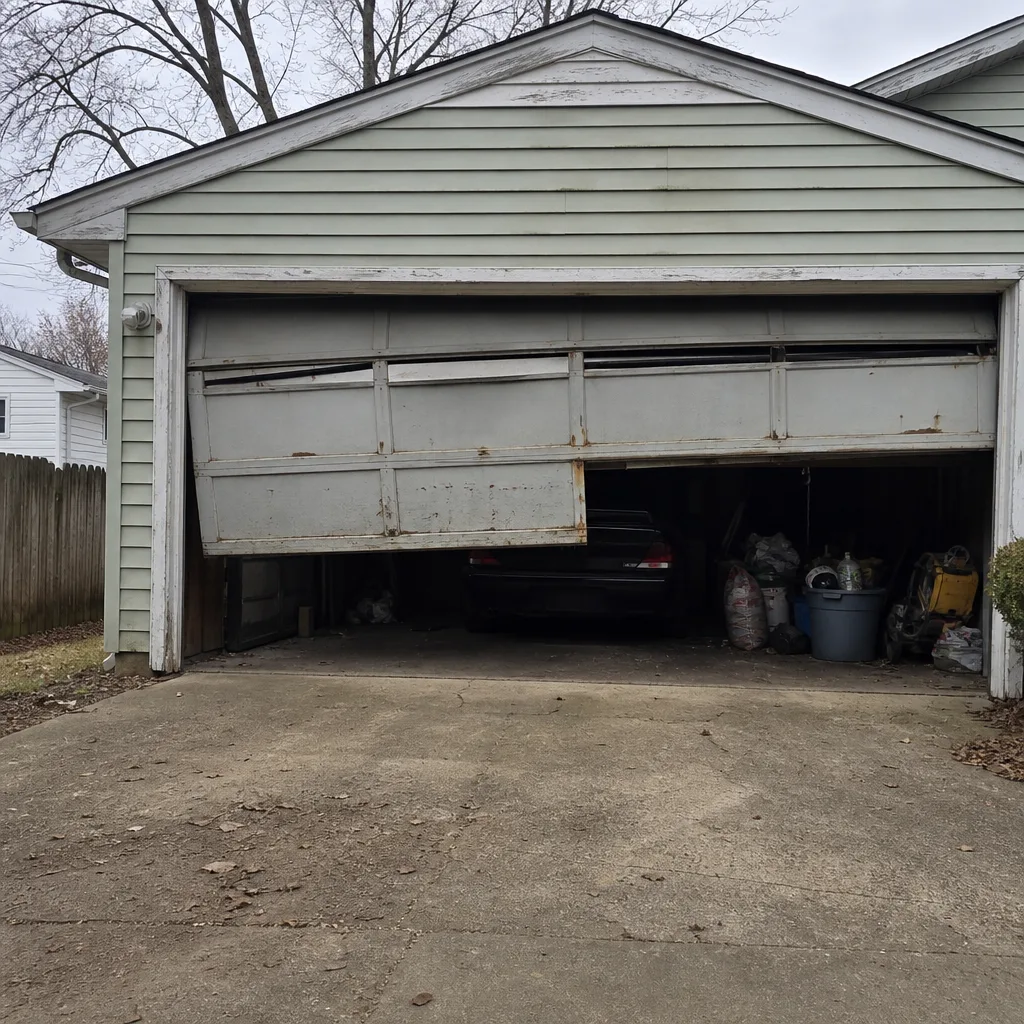 Before
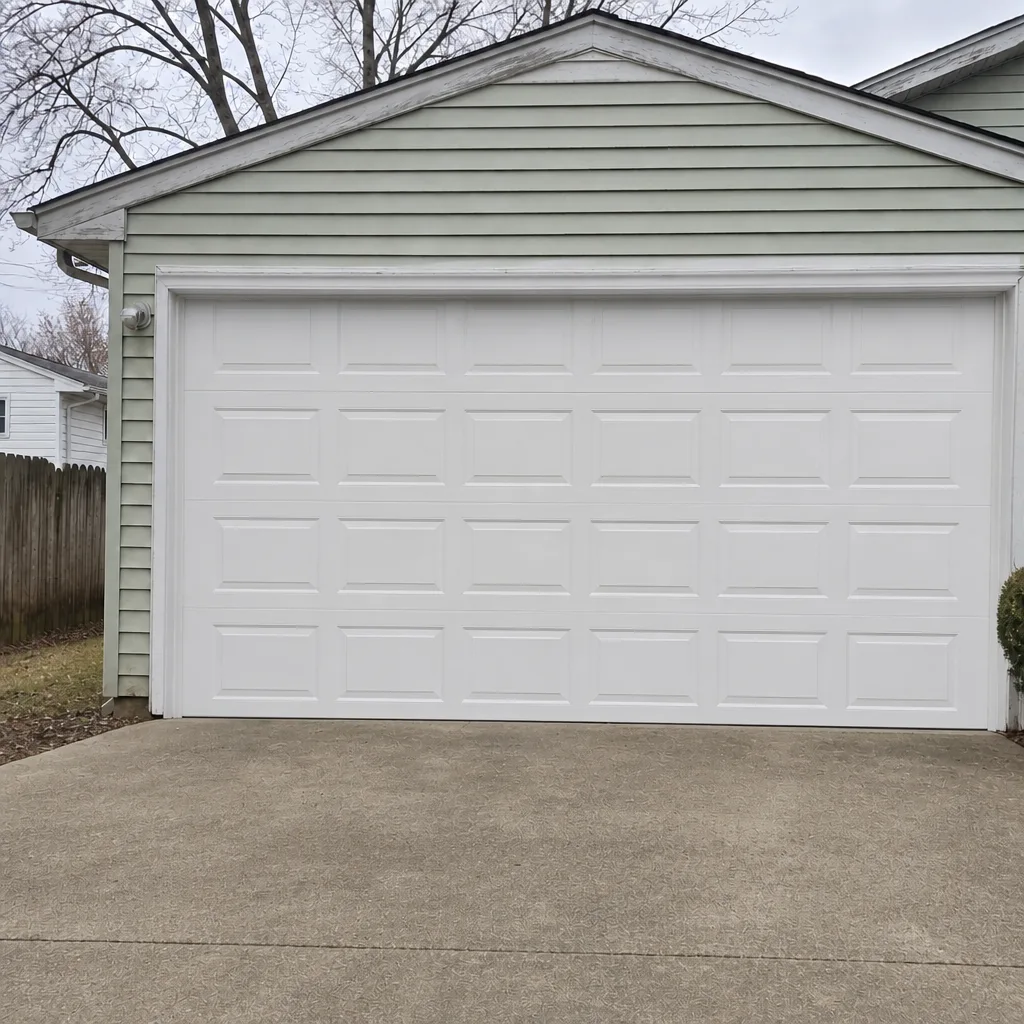 After
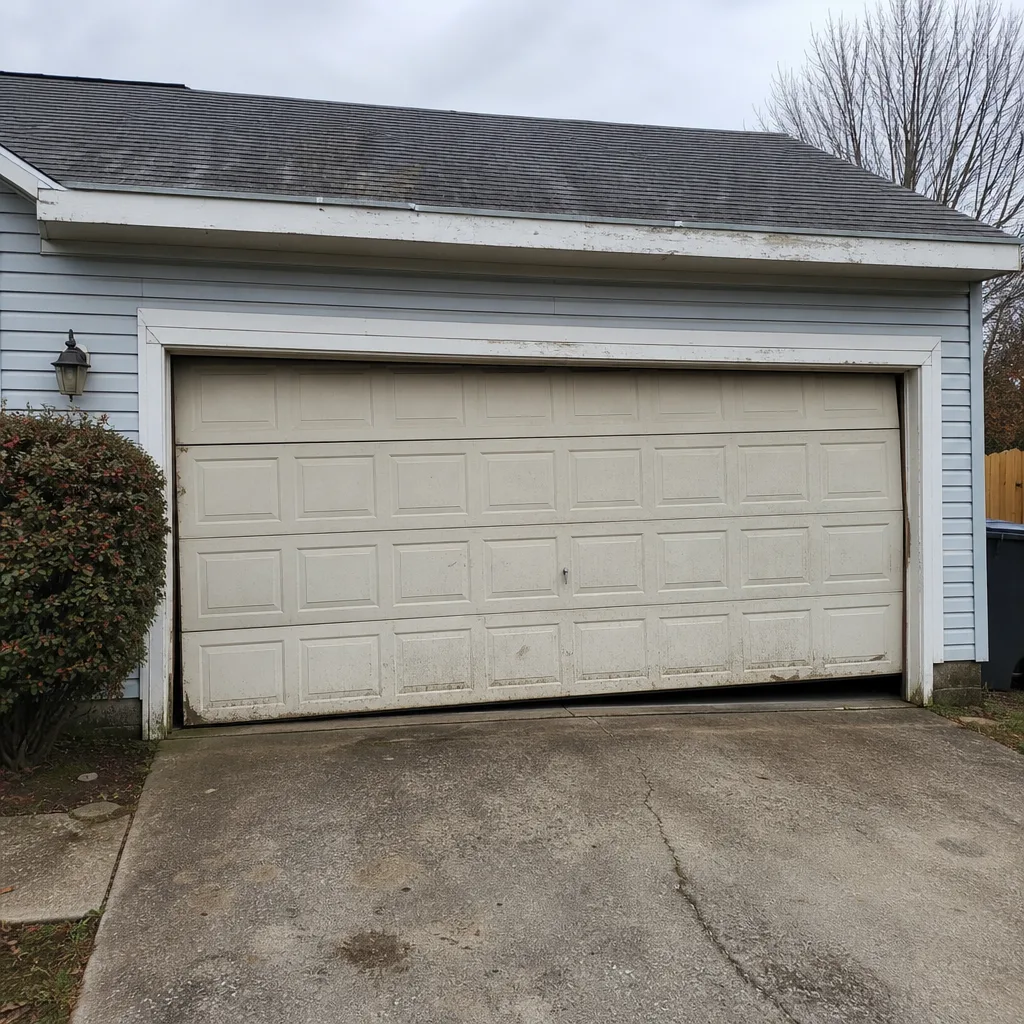 Before
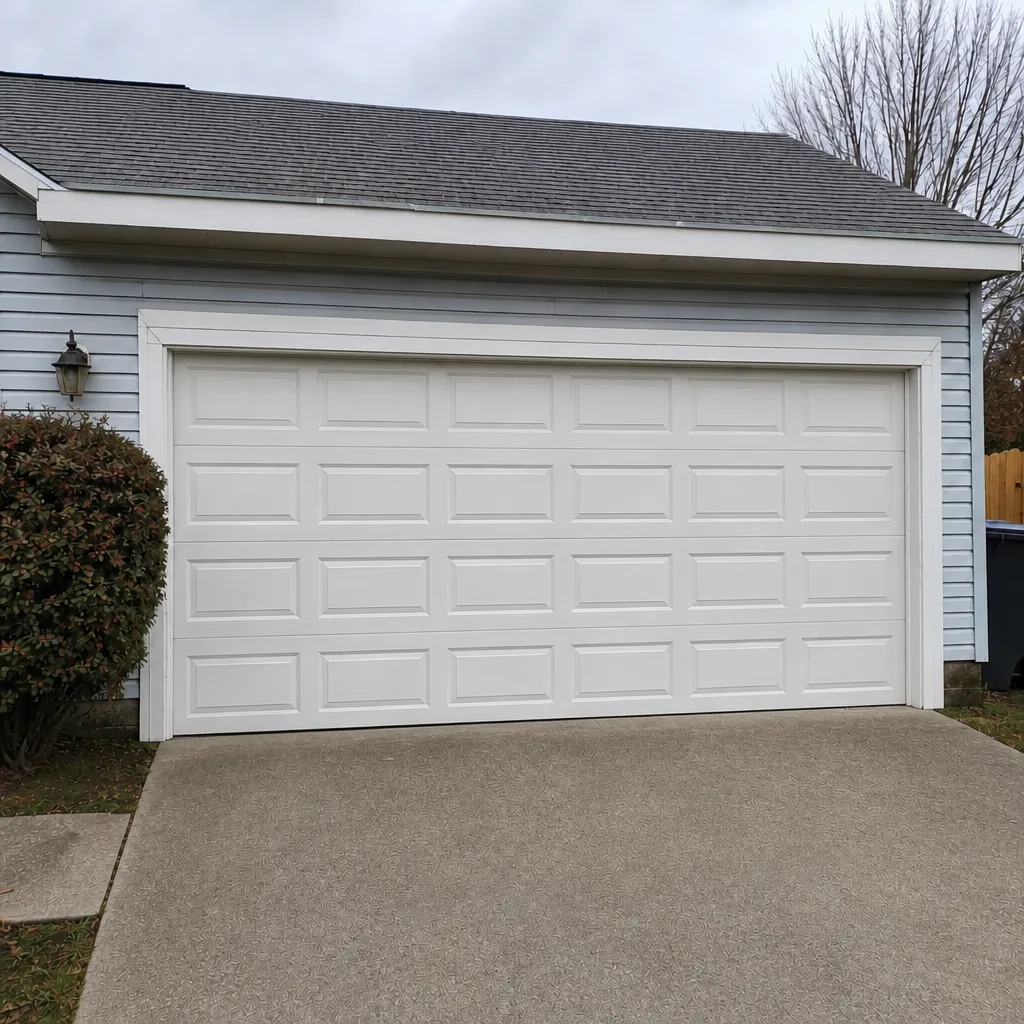 After
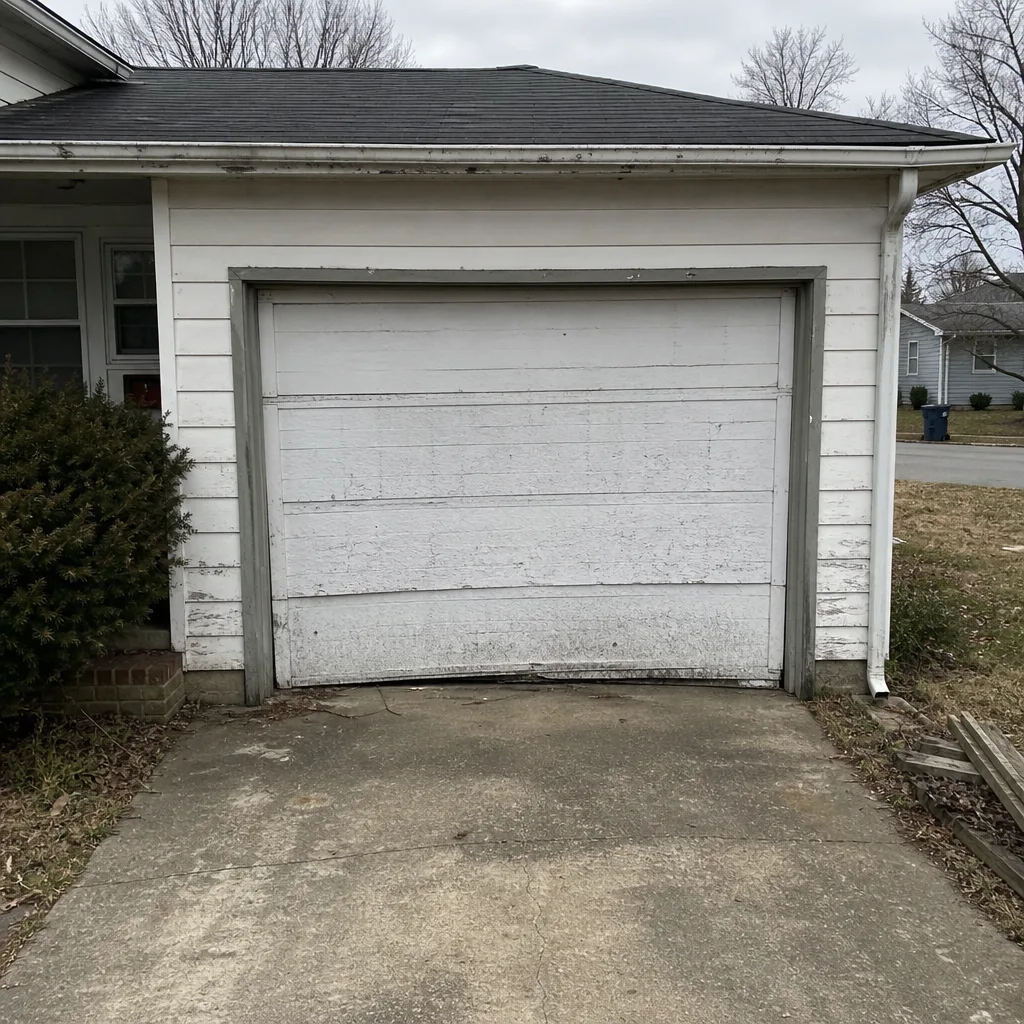 Before
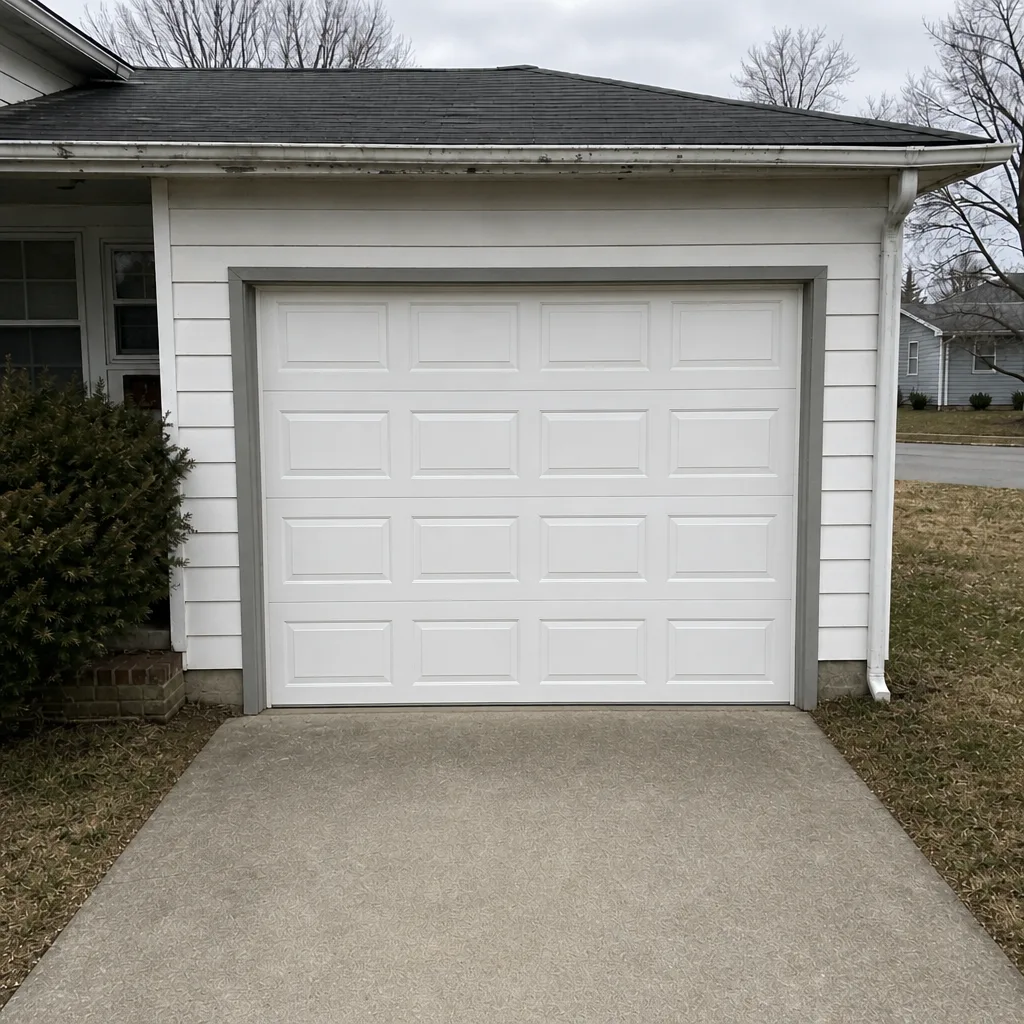 After
When to Call a Professional
Call a professional when the scope involves structure, springs, electrical, or safety. Springs are the most dangerous part of any garage door, and torsion and extension spring jobs are not a homeowner project. A door off its tracks, a snapped cable, a bent header, or an opener that’s drawing the wrong circuit are all jobs where a trained hand matters, and where the permit question may come into play depending on the scope. A new opening, a widened bay, or header work always warrants a professional who will pull the permit and stand behind the inspection.
For everything simpler, a repair call gets the door back in working order without any of the permit overhead. Suffolk Garage Door Repair Pros offers free estimates in Suffolk. Our technicians have up to 9 years of experience, and we’re factory-familiar with LiftMaster, Chamberlain, Genie, Clopay, Amarr, Wayne Dalton, Craftsman, and Raynor. Call (855) 894-0378.
Frequently Asked Questions
It depends on the scope. A like-for-like replacement in the same opening with no structural change is often exempt, while a change to the opening, header, framing, or an added opener circuit typically requires a permit. Call Suffolk’s building department and describe the exact job. Call (855) 894-0378 for a free estimate on the door work itself.
Usually not, unless the work includes new electrical wiring or a new circuit. Replacing an opener with a comparable unit on the existing circuit is generally a repair. If the job involves running new wire or adding a circuit, ask the building department whether an electrical permit applies. For either case, call (855) 894-0378 for a free estimate.
Suffolk’s timeline depends on the department’s workload and the completeness of the application, and we won’t guess at a number for you. Straightforward residential applications often clear in days rather than weeks, but call the building department for the current estimate on your specific job. For the door work itself, call (855) 894-0378 for a free estimate.
You can, but the missing permit will likely surface during the buyer’s inspection and can delay the closing or push you into a retroactive permit application. If a past replacement involved structural work and no permit was pulled, call Suffolk’s building department to ask what documentation they need to close the gap. Call (855) 894-0378 for a free estimate on any repair or replacement you need before listing.
Not automatically, but a claim involving a garage door structural failure or opener electrical issue may invite questions about the work’s permit record. The safest position is to have the permit and inspection on file. Call (855) 894-0378 for a free estimate on getting the work brought into compliance.
No. Spring repairs, opener repairs, track repairs, and cable replacements are typically treated as repairs, and repairs generally don’t require a building permit. The structure of the opening isn’t changing, so the permit requirement doesn’t apply. Call (855) 894-0378 for a free estimate.
The Bottom Line
Permits in Suffolk follow the scope, not the address. Like-for-like door replacements usually stay exempt. Structural changes to the opening, the header, the framing, or the electrical circuit typically require a permit, and the paperwork should be in the contractor’s name with the inspection record handed back to you at the end. If you’re unsure, call Suffolk’s building department. They’ll tell you exactly what your job requires, and the answer takes minutes. When the door work itself needs attention, we’re here for that part.
Call (855) 894-0378 for a free estimate. We answer 24/7. Fast dispatch from 7am to 7pm, Sunday through Friday. We work on the brand you already have, from Amarr and Wayne Dalton to Craftsman and Raynor, and we handle repair, opener repair, spring repair, and full installation under one provider. From a single broken spring to a full new installation, we’ve seen the scope in Suffolk and we’ll tell you straight whether the job needs a permit before we book it. Review our Suffolk Garage Door Repair Pros services to get started.
Written by the team at Suffolk Garage Door Repair Pros.