
Last updated November 22, 2026
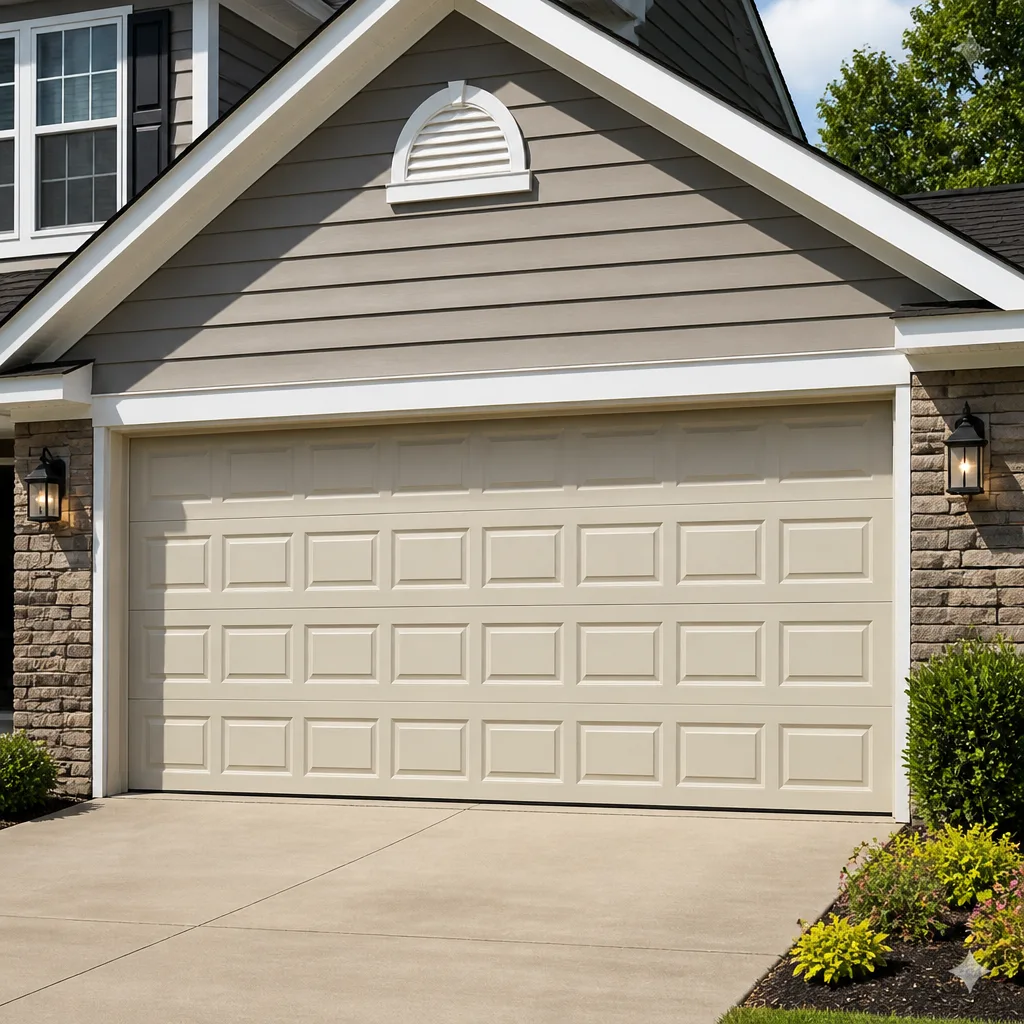 Raised-panel steel
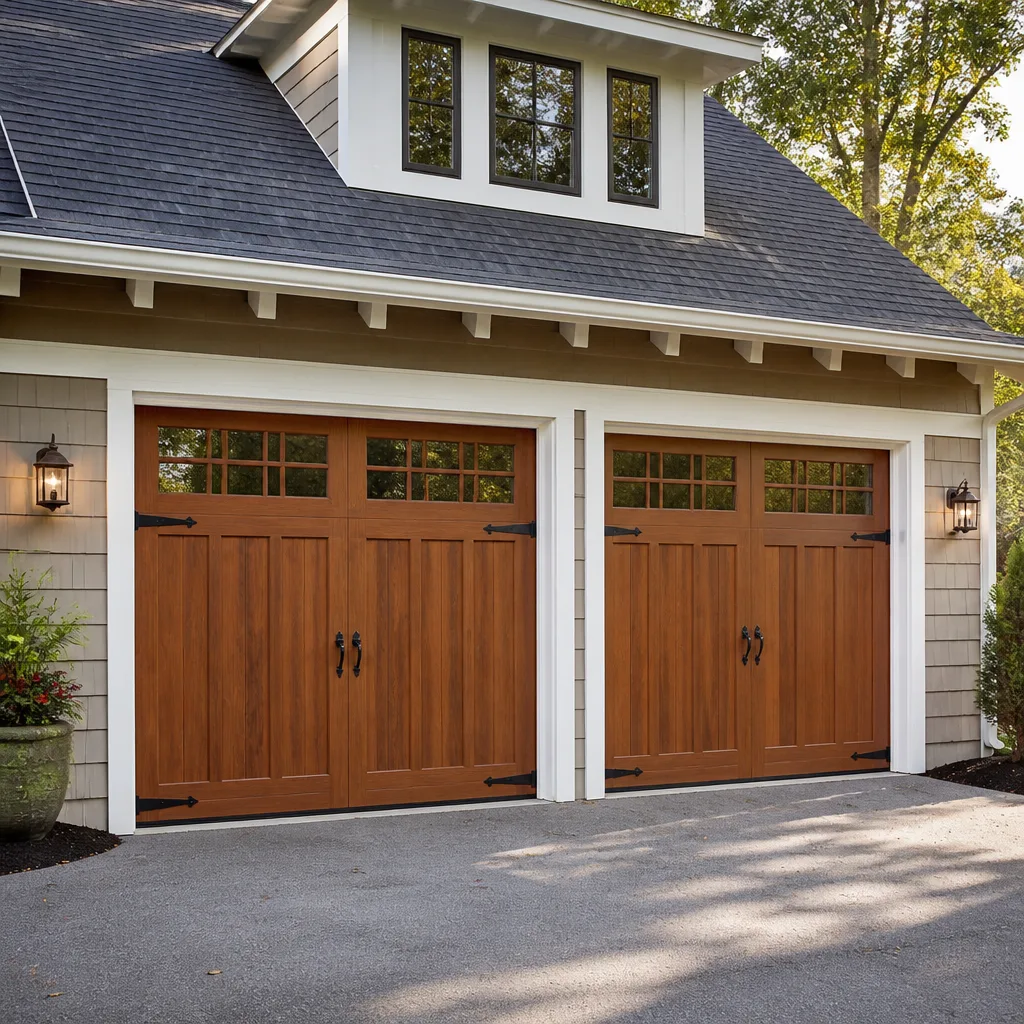 Carriage house
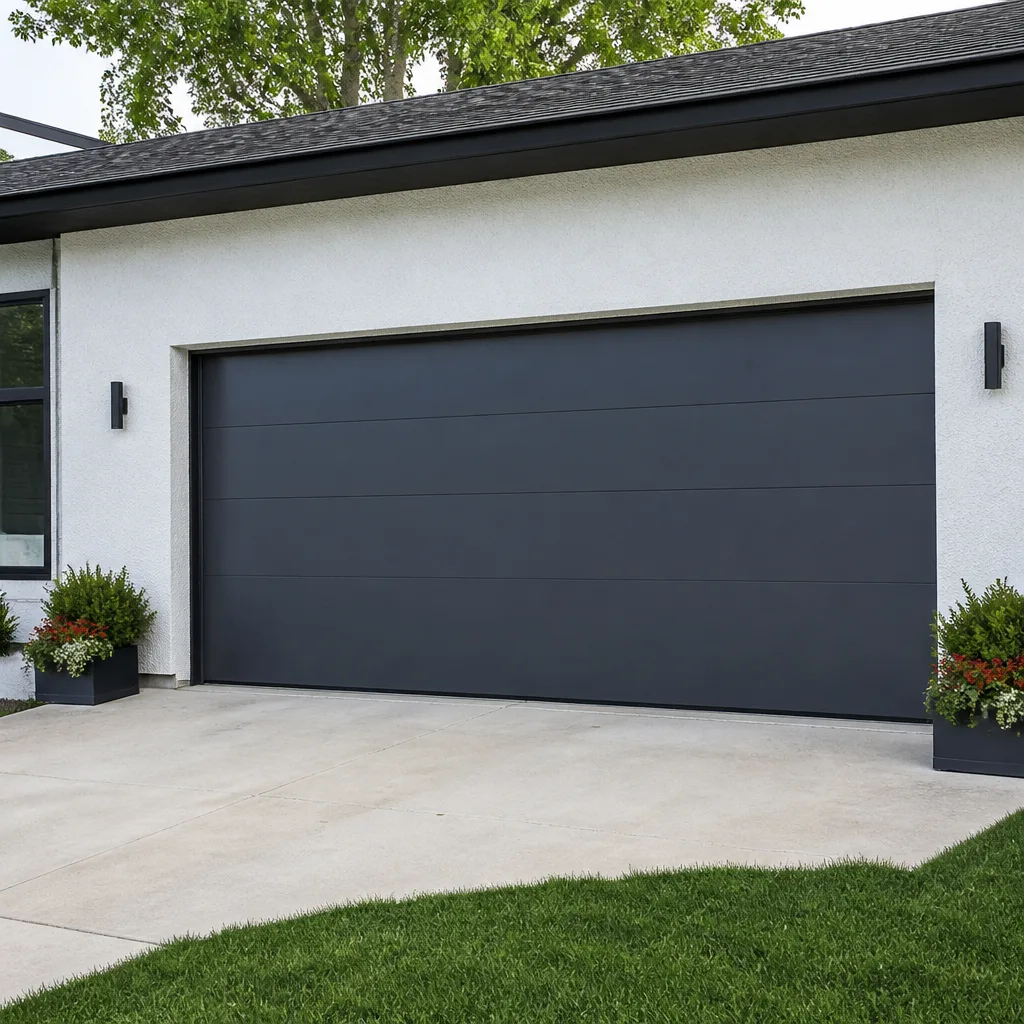 Modern flush
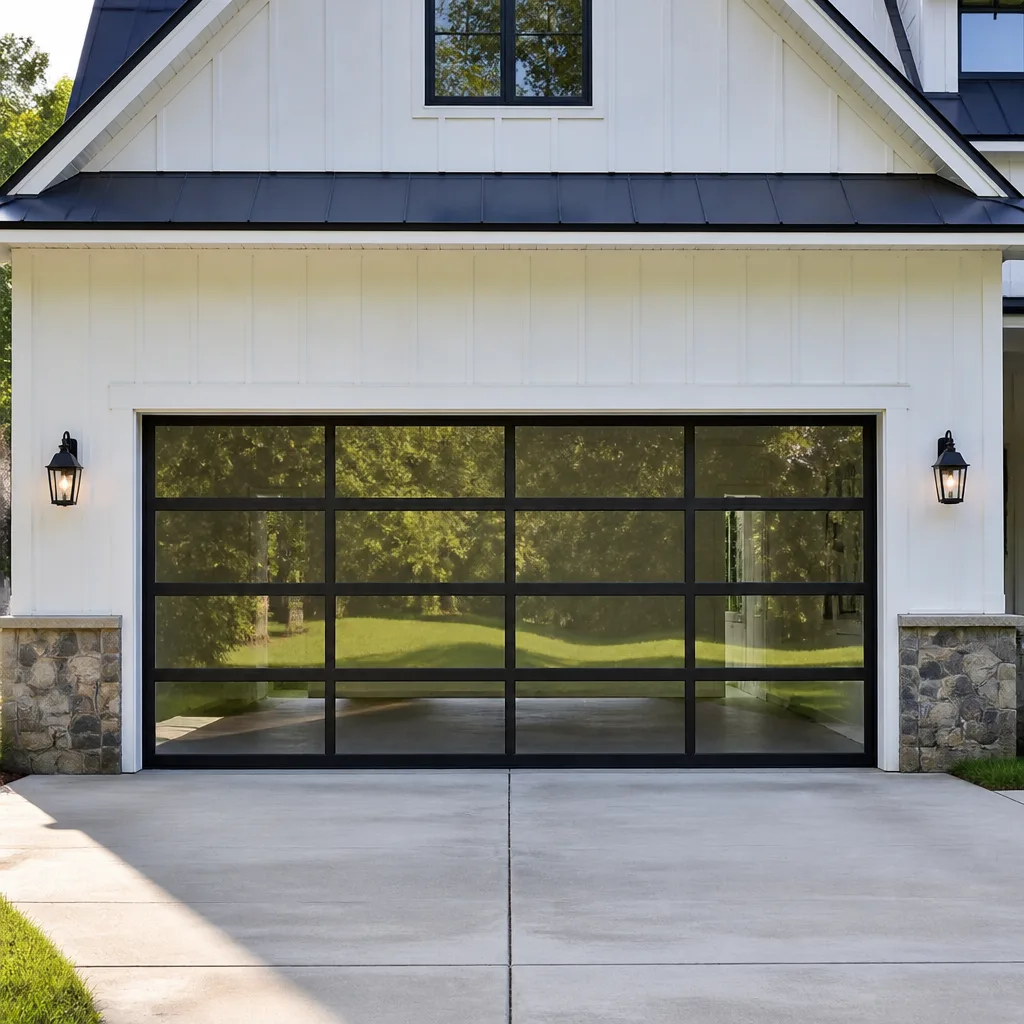 Full-view glass
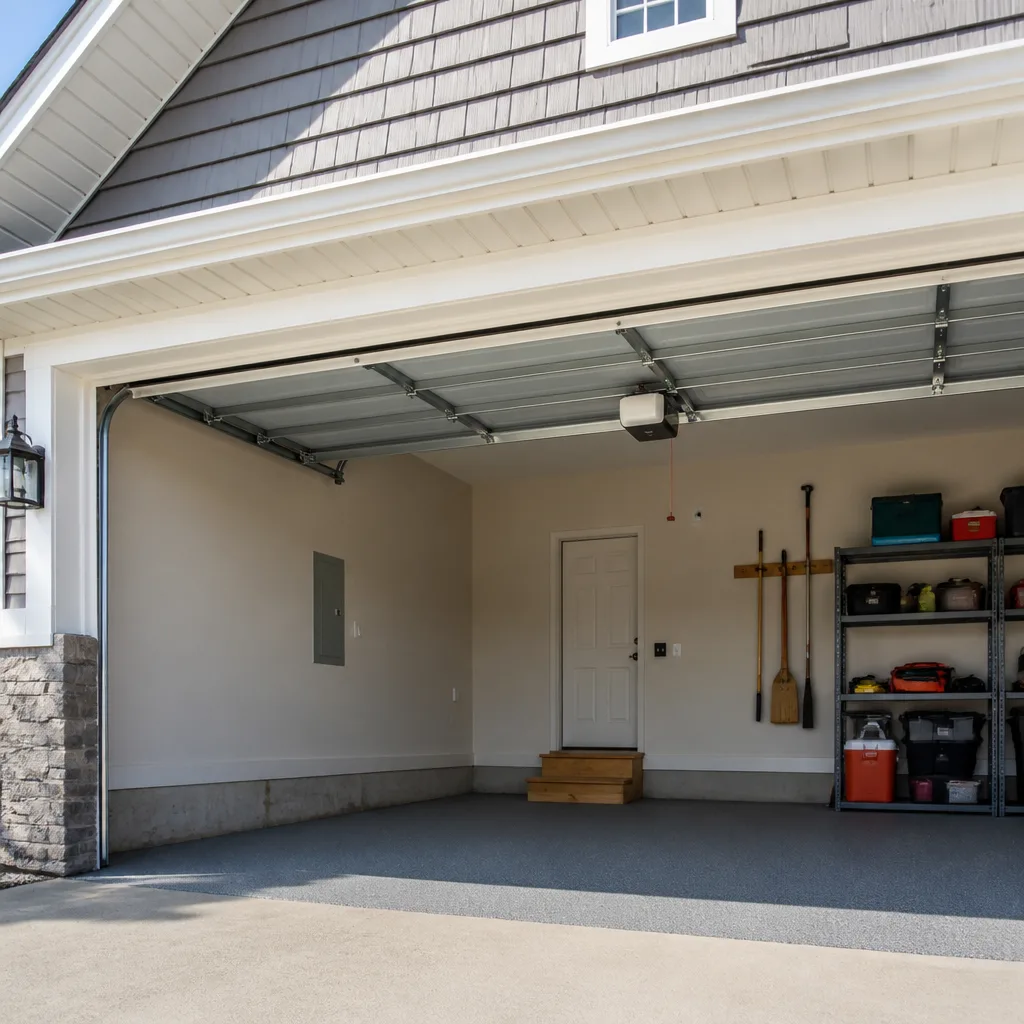 LiftMaster openers
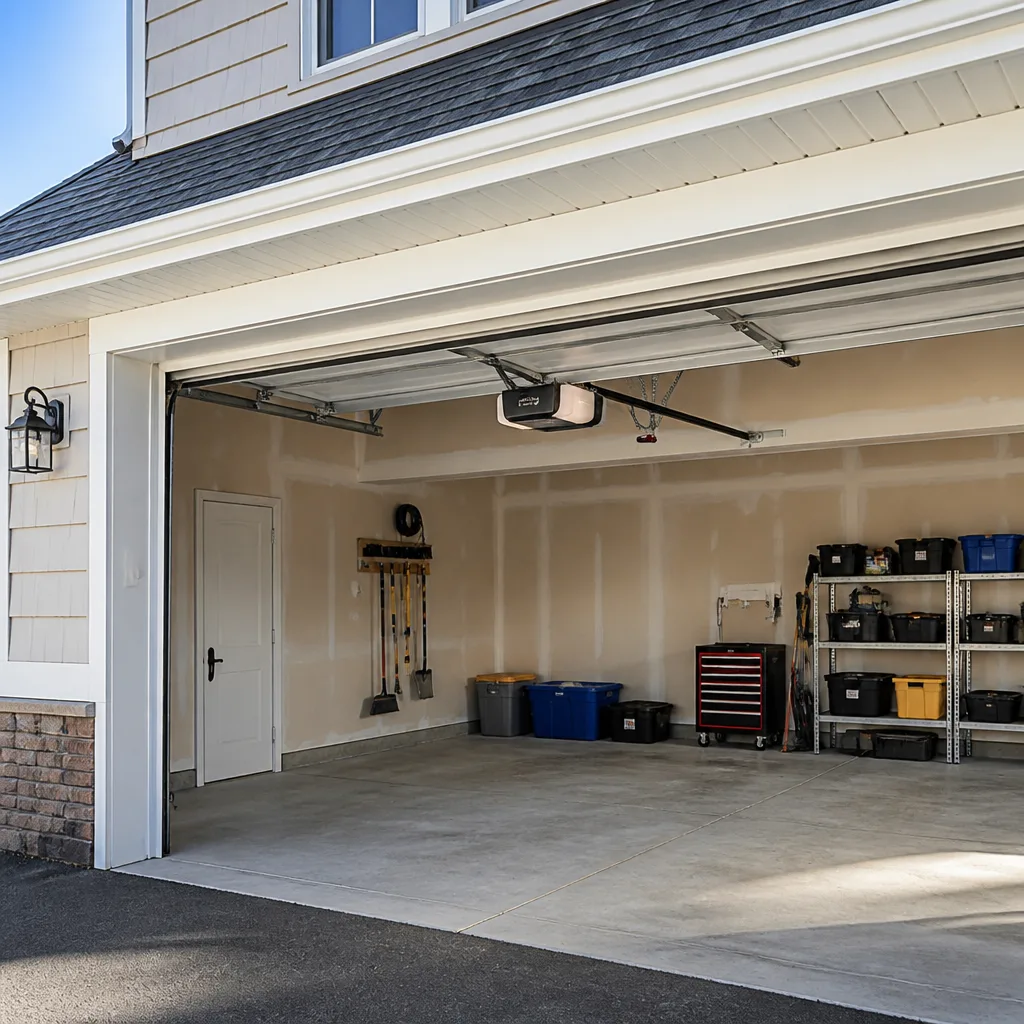 Chamberlain openers
Full 25-point door and opener safety check with every visit - springs, cables, rollers, tracks, and your LiftMaster or Chamberlain opener included
You get a price before we start. It does not change when the pro arrives.
Get your free estimateGarage Door Emergency Preparedness Guide for Suffolk Homes
Most Suffolk homeowners believe a garage door emergency begins with a loud bang. In our experience, it usually begins quieter than that: with a power outage, a storm that takes out the opener’s battery backup, or a car parked inside a door that suddenly won’t budge. Hurricane season runs June through November in Suffolk, and the nor’easters that roll through Hampton Roads in winter cause their own share of trouble. The failure you’re most likely to face isn’t a broken spring. It’s a door that can’t move when you need it to. This guide covers how to prepare, what to test, and what to do when things go wrong.
Quick Answer
Garage door emergency preparedness in Suffolk means three things: testing your opener’s battery backup before each hurricane season, knowing how to use the manual release correctly without damaging the trolley carriage, and having a temporary plan for securing a door that won’t close after storm damage. Inspect the door and its hardware before a named storm makes landfall, not after. When the door won’t move at all, or the frame is compromised, call a trained technician rather than forcing it.
Styles & brands we work with
- Raised-panel steel
- Carriage house
- Modern flush
- Full-view glass
- LiftMaster openers
- Chamberlain openers
Table of Contents
- Why Suffolk Garage Door Emergencies Are Different
- How to Use the Emergency Manual Release Without Breaking It
- Battery Backup Testing: What “Tested” Actually Means
- Pre-Storm Inspection Checklist for Suffolk Homes
- What to Do When a Vehicle Is Trapped Inside
- How to Temporarily Secure a Door That Won’t Close
- What You Can Check Yourself vs. What Needs a Technician
- What to Do After the Storm Passes
Why Suffolk Garage Door Emergencies Are Different
Suffolk sits in Hampton Roads, which means hurricane season and nor’easter season both deliver the same three failure modes to a garage door. First, power loss. When the grid goes down, any opener without a working battery backup leaves the door frozen in place. Second, storm debris impact. Limbs and wind-driven material can bend tracks or dent panels, and a door with a bent track will jam the next time it moves. Third, flooding at the door threshold. Water rising at the seal can soak the opener’s motor housing and warp the bottom panel, and it can also cover the tracks in silt that pits and binds them once it dries.
What makes this different from generic “the door won’t open” advice is timing. The failure usually happens while the house is occupied, often while a storm is still active, and often when the homeowner needs the car to leave. Waiting until a storm is already overhead to discover a dead battery backup is the single most common problem we’ve seen. It is also the most preventable.
Suffolk’s housing stock adds to the difficulty. Neighborhoods on the north and west sides of the city, including Bennetts Creek and Harbour View, are newer builds with modern garage door opener repair equipment that includes battery backup. Older sections of the city, including the historic core and the older subdivisions off Shoulders Hill Road, often have legacy openers without backup. Both need testing, but they fail differently.
How to Use the Emergency Manual Release Without Breaking It
The emergency manual release is a pull cord on the trolley carriage, and it’s what lets you open the door by hand when the opener is dead. It’s also the part most homeowners break by pulling it wrong. The cord disconnects the carriage from the drive rail. Pull it while the door is closed, and the door should then move freely, or at least as freely as its springs let it.
The mistake is pulling the cord while the door is up, or pulling it with the door partway open. That leaves the carriage disconnected while the door is in a loaded position, and the springs can slam the door closed. The result is a bent bottom section, a cracked panel, or worse. Never pull the release with the door off the floor unless you’re deliberately trying to lower a dead door and you can control its descent.
A second common mistake is re-engaging the release in the wrong direction. On most openers the carriage re-engages when the opener runs, but if the trolley is not aligned with the carriage the drive will jam. Forcing it can strip the carriage’s teeth. If the trolley doesn’t click back into place after a manual open and close, don’t keep cycling the opener. Stop and have it inspected.
The specific mistakes that break the trolley carriage:
- Pulling the release with the door open or partway up.
- Pulling with force when the cord is already taut (that usually means the door is under spring tension, not stuck).
- Cycling the opener repeatedly when the carriage won’t re-engage.
- Pulling the release on a door with a snapped spring, then letting it fall.
- Reaching behind the carriage with hands or tools while the opener is powered.
If the release doesn’t work or the door still won’t move by hand, the issue is usually mechanical, not electrical: a snapped spring or a door off its tracks. Those are the cases where you call for garage door repair rather than forcing it.
Battery Backup Testing: What “Tested” Actually Means
Battery backup testing means more than pressing the wall button and seeing the door move. What it actually means is killing the power at the opener’s circuit or the breaker, then running the door a full open-and-close cycle on battery alone and timing it. If the door is slow, stalls partway, or will only cycle once, the battery is weak. The battery is usually the weak point in a power-loss emergency, not the opener.
Suffolk homeowners should do this test before each hurricane season, in spring, and again before the worst of the winter nor’easters. Here’s the protocol:
- With the door closed, switch off the breaker that feeds the opener.
- Press the wall control and run the door up. Note whether it moves at normal speed.
- Run it back down. Note whether it closes fully.
- Repeat one more full cycle. A healthy battery handles both cycles without noticeable slowdown.
- Restore the breaker and confirm the openers reconnect and the safety sensors respond.
What “tested” does not mean is a glance at the battery indicator light. Those lights can show ready with a battery that will fail under load. The only real test is running the door on battery power.
If your opener is a LiftMaster or Chamberlain system with the myQ app, the app will report a low battery level, but the app is a warning, not proof. Older Craftsmans and legacy Genie units often have no indicator at all. On those, the test above is the only reliable check.
The other point worth stating: a garage door on battery backup should still be lighter than a door without one to the touch. If the door is unusually hard to lift by hand, the springs are compromised, and the battery is only masking a mechanical problem.
Pre-Storm Inspection Checklist for Suffolk Homes
Before a named storm makes landfall, walk your door and check these items. This is the pre-storm inspection that costs nothing and prevents most of the emergencies we see in Suffolk after a weather event. Do it on a calm day, not during a storm watch.
- Run the door a full open-and-close cycle. Listen for grinding, popping, or uneven movement. A door that hesitates is already signaling a problem.
- Test the battery backup as described in the section above. Don’t skip this step because you tested it last year.
- Test the safety sensors. Wave a hand or a piece of cardboard across the sensors at the bottom of the tracks. The door should reverse if it’s trying to close.
- Look at the springs. Check the torsion spring above the door and any extension springs alongside the tracks. A gap in a torsion spring or a stretched extension spring means it’s failing.
- Inspect the tracks. Look for dents, bends, or gaps between the rollers and the track. A bent track is a jam waiting to happen.
- Check the door seals and weatherstripping. If the bottom seal is cracked, it will let in water during a storm. If it’s failing, replace it before the season.
- Clear the path to the door. Remove anything stored behind the door that could block a manual open. The garage should be clear enough to lift the door by hand if you have to.
- Check the manual release cord. Make sure it hangs free and is accessible. A cord tucked behind the rail won’t help when you need it.
If any item on this list fails, schedule a technician before the storm, not after. Suffolk Garage Door Repair Pros handles the full range of pre-season work, from garage door spring repair to opener replacement. The estimate is free.
One more Suffolk-specific note: if your home is in a low-lying area, move anything stored on the garage floor up onto shelving. Flooding at the door threshold is real in this region, and it’s the door seal that fails first.
What to Do When a Vehicle Is Trapped Inside
When a vehicle is trapped inside a garage after structural damage, the safest answer is almost never to force the door open yourself. The door and its frame may be unstable, and a door that comes down unexpectedly is a serious injury risk. Assume the door is under load and that its springs may be compromised until a trained technician confirms otherwise.
What to do:
- Confirm no one is under the door or behind the car. Check the full area around the vehicle.
- Do not pull the manual release if the door is up or the frame is clearly damaged. A door with a compromised track or spring can fall.
- Turn the door’s own light on if it’s working. Visibility helps and keeps the space safe for framing the problem.
- Check the tracks for visible deformation. If the tracks are bent or the door is off the rollers, do not attempt to straighten them by hand.
- If the frame is intact and the door is closed, test the release gently. If the door lifts, hold it up on its own, don’t let it fall.
- If the door won’t move cleanly, stop. Call a technician and describe what you see. This is exactly the kind of call we’re set up to handle.
Without tools is the key phrase. A vehicle trapped in a structurally damaged garage is a call to make, not a project to force. The people who try to pry a door with a car in the bay are the ones who get hurt.
How to Temporarily Secure a Door That Won’t Close
If a door won’t close after storm damage, the priority is to stop secondary weather from coming in and to keep the house secure. You can usually do this safely with materials you already own, provided the door isn’t loaded, about to fall, or off its tracks.
First, make sure the door is being held open by a mechanical fault, not by something in the way. Check the tracks and the floor for debris. Next, use a temporary closure:
- Heavy-duty straps or ratchet straps run from the door’s bottom bracket down to the floor anchors, keeping the door from slamming shut.
- A brace cut to size wedged under the door’s bottom section, if the door is structurally sound and this can be done without putting yourself in the path of the door.
- Tarp and tape across the opening to keep weather out, backed by a locked interior door or manual furniture.
- Security bars or a door bar on the inside of the opening to prevent someone from pulling the door up from outside.
Never wedge a door that’s off its tracks. And never put your weight under the door to keep it up. If the door is unstable, back away and call.
This is also where a solid security door matters. If you have a Clopay or Amarr door with a solid steel bottom panel, storm damage to the seal is often easier to address than damage to the door itself. If the door is full of dents and the track is bent, the temporary fix carries you to the technician’s visit. A damaged Suffolk Garage Door Repair Pros page path might not carry you through the season.
What You Can Check Yourself vs. What Needs a Technician
Some parts of a garage door are safe to check. Others are dangerous to touch, and no amount of homeowner preparation changes that. Know the line.
Safe to check yourself:
- The manual release cord and whether it’s accessible.
- The battery backup, using the full-cycle test.
- The safety sensors for obstruction and response.
- Track alignment and visible bends in the door panel.
- Weatherstripping and bottom seals for cracks or gaps.
Possibly safe to inspect:
- Visual check of springs for gaps, stretching, or obvious damage.
- Listening for unusual sounds during a normal cycle.
- Testing the wall button and remote response.
Needs a technician:
- Replacing torsion or extension springs. This is the mechanical element that carries the door’s full weight.
- Straightening or replacing bent tracks. A bent track puts the door at risk of coming off the rollers.
- Anything electrical beyond the battery and breaker. The opener’s motor housing and capacitor are not DIY territory.
- A door that’s off its tracks or one that’s fallen. Do not attempt to lift it back into place.
Springs are the most dangerous part of any garage door. Leave it to a trained technician. A torsion spring under load can cause serious injury if it releases while you’re touching it. The same goes for a door that’s off its track: the door and its springs together can cause it to fall in an uncontrolled way. Our technicians have up to 9 years of experience with these systems, and spring work gets a dedicated appointment, not a five-minute check.
What to Do After the Storm Passes
Once the storm has passed and it’s safe to walk outside, the recovery work begins. Do these steps before you reopen the door:
- Clear debris from the tracks and the door path. Small pieces of limb and grit in the track will damage rollers.
- Look at the door panels for dents and the tracks for bends. A door that looks fine but sits crooked is often fine, and a door that looks fine with a bent track is not.
- Run the manual release check to confirm the door moves freely by hand. If it doesn’t, don’t run the opener.
- Restore power and run one full cycle on the opener. Stop if the door hesitates or the carriage slips.
- Test the battery backup again. A season of storms can drain a battery that looked fine in spring.
- Inspect the interior for water infiltration at the threshold. Silt in the tracks should be cleaned and the tracks wiped dry.
If something fails these checks, get it seen before you rely on the door again. A door that’s jammed, a spring that’s snapped, or an opener that won’t cycle are the priority issues, and each is a job for a trained technician, not a homeowner with tools.
Common Mistakes to Avoid
- Pulling the manual release with the door up. The carriage disconnects while the door is under spring load, and the door can fall. Pull it with the door fully closed.
- Trusting a green light as a battery test. The indicator light on a battery backup can show ready when the battery will fail under the load of one cycle. Run the full test.
- Testing battery backup only in fall. Suffolk faces hurricane season in the summer and nor’easters in winter. Test before both, not just once.
- Forcing a door with a bent track. The track and rollers are what keep the door in line. Forcing it can drop the door off the rollers entirely.
- Prying a door with a car inside. A vehicle in a structurally damaged garage is not a reason to force anything. Call a technician.
- Waiting until the storm to check the seal. A cracked bottom seal lets water in during the storm, and the flooding it causes does more damage than the seal replacement would have cost.
- Straightening tracks by hand. A track that’s been bent is under tension, and bending it back is a mechanical job. Don’t try it.
See the difference
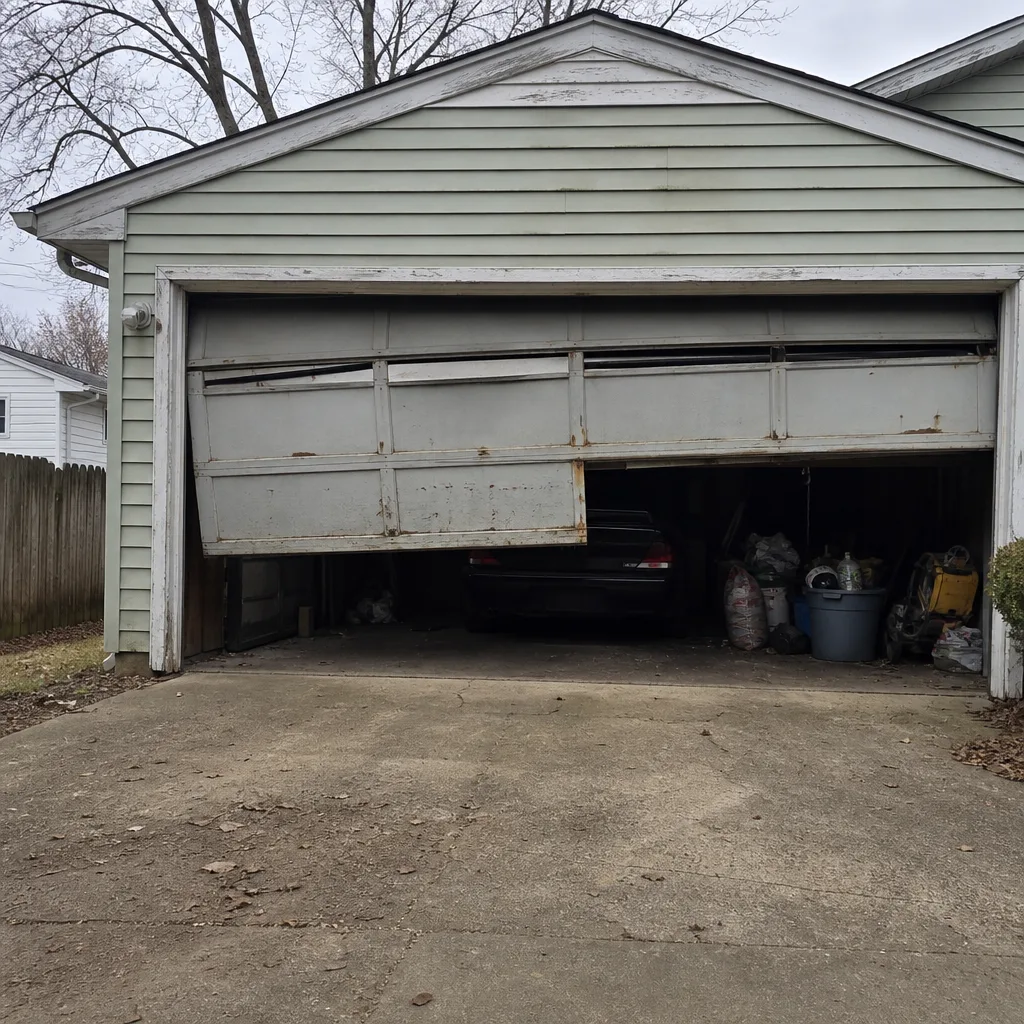 Before
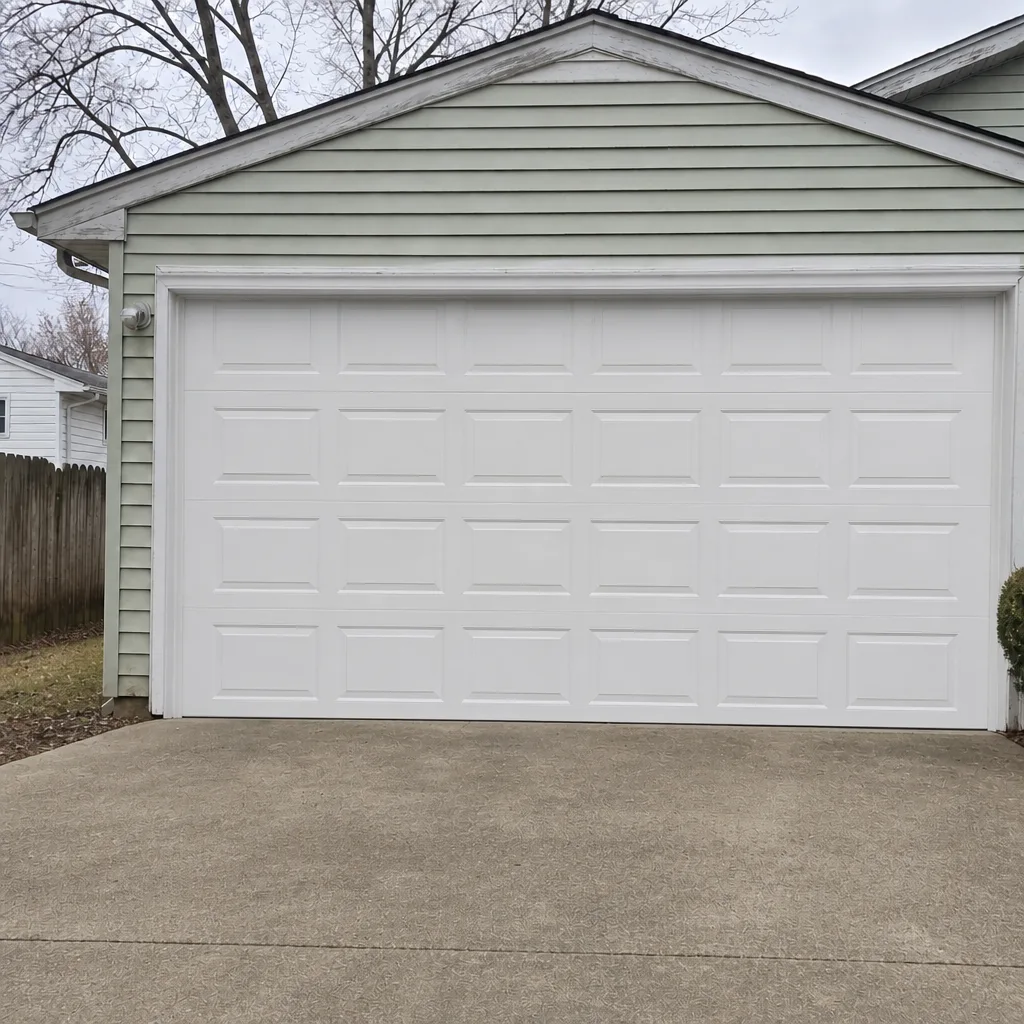 After
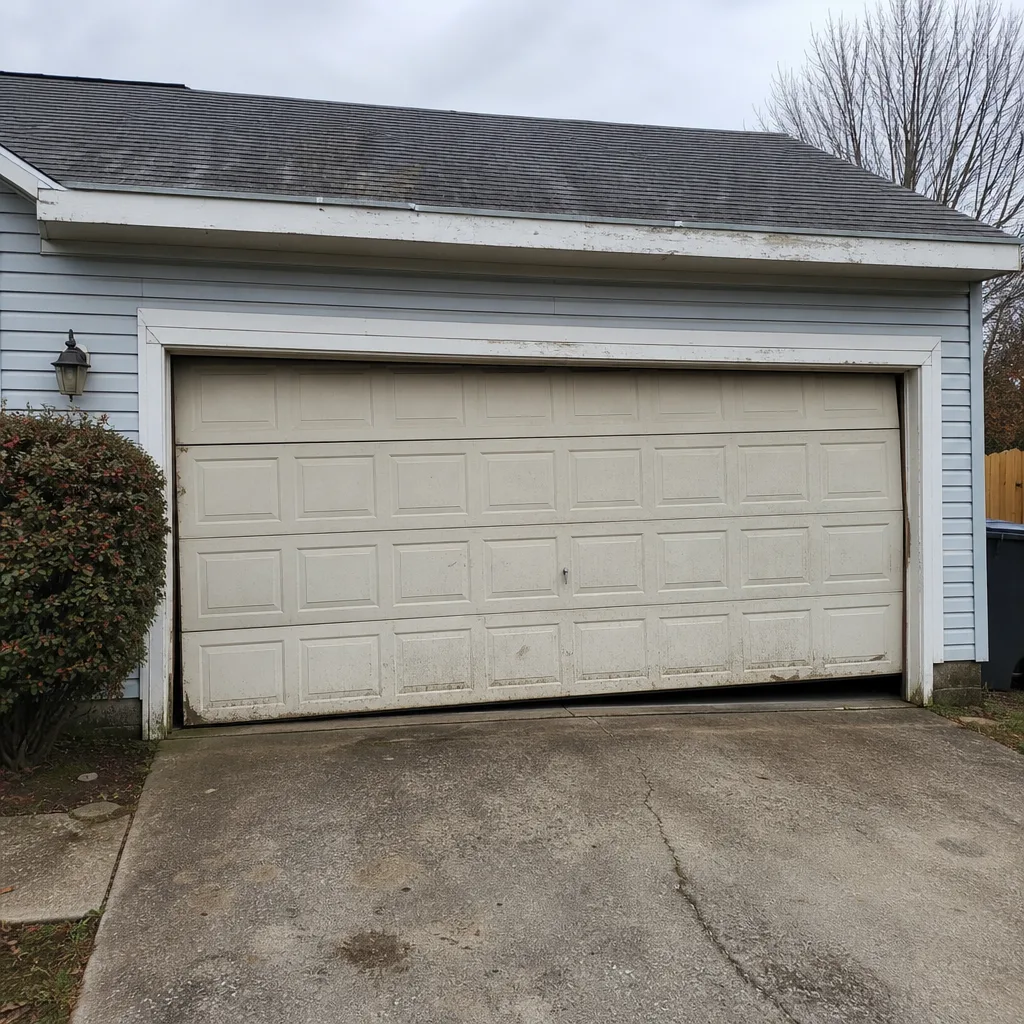 Before
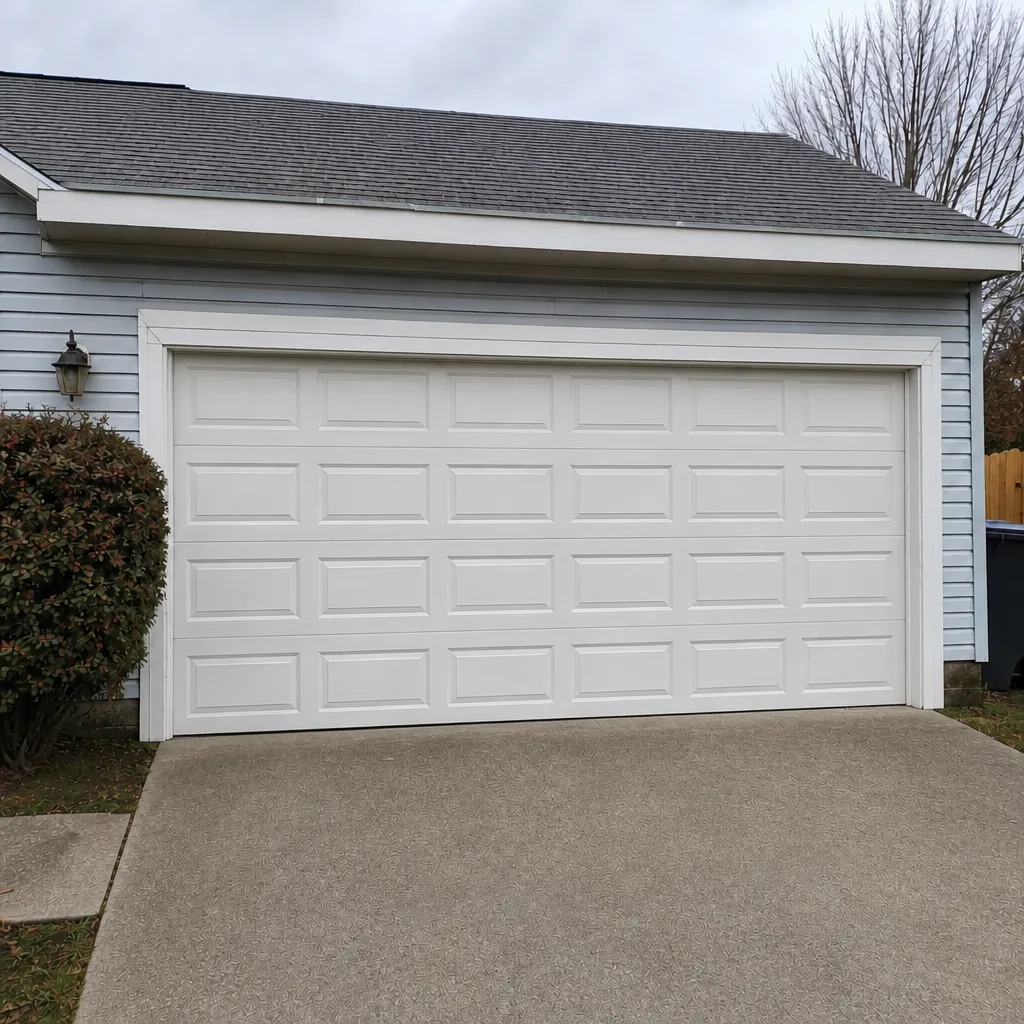 After
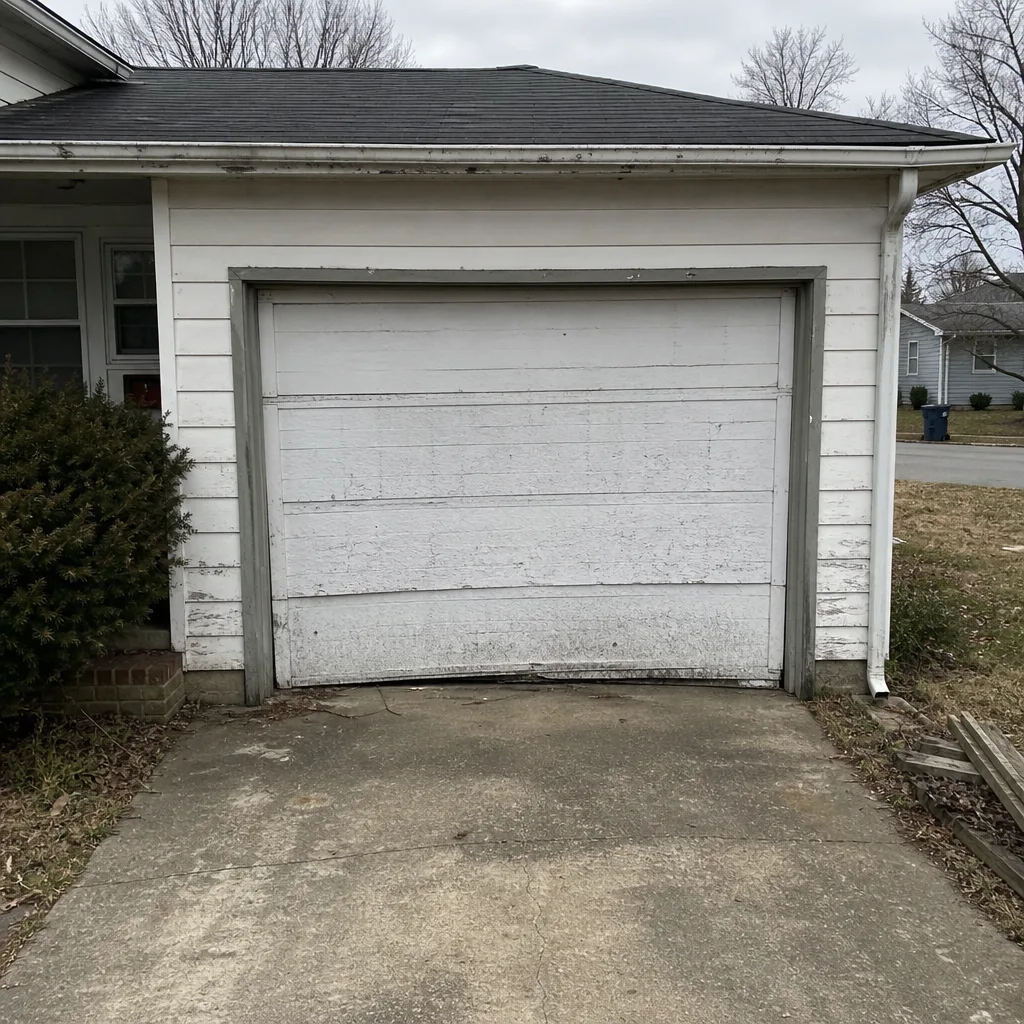 Before
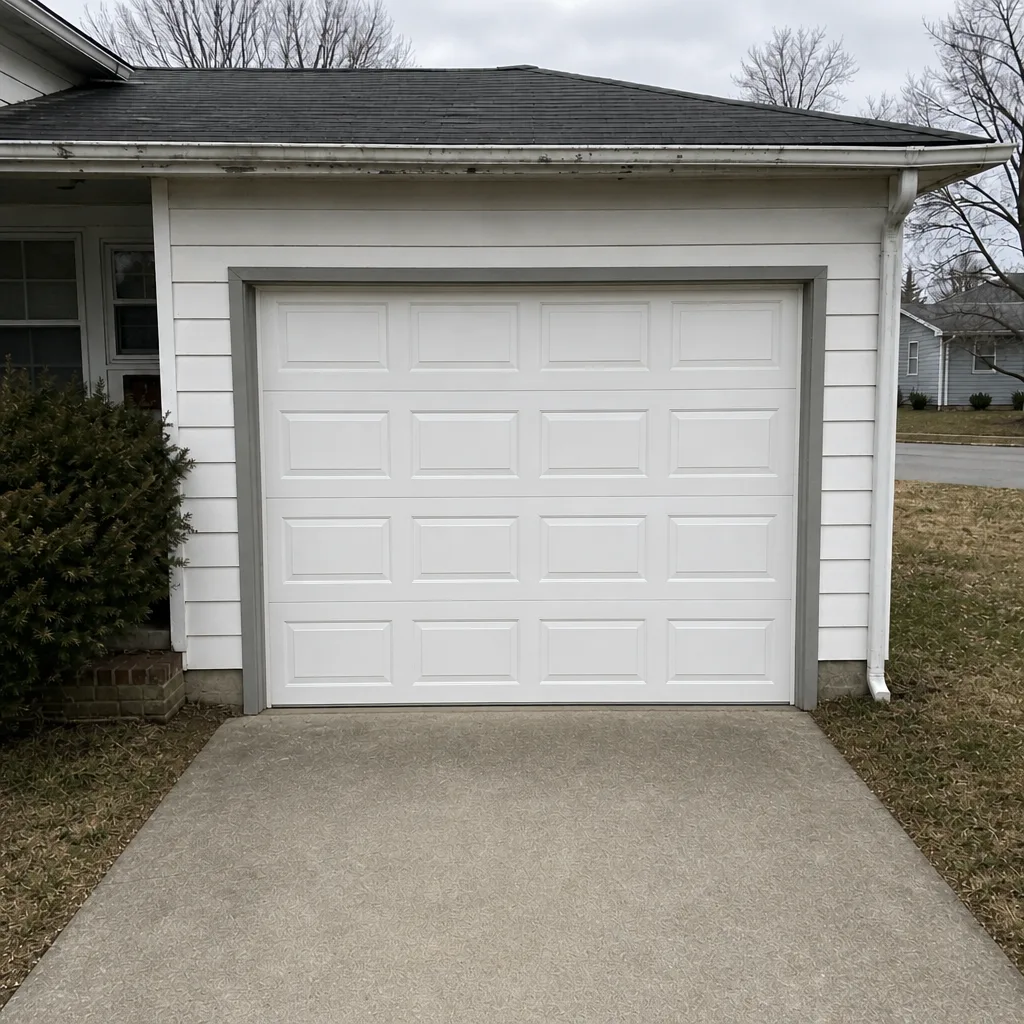 After
When to Call a Professional
Call a professional when the door won’t move at all, when the springs are damaged, when the tracks are bent, or when a door is off its tracks and parked in the open or closed position. Call when a vehicle is trapped behind a compromised door. Call if the opener cycles but the door doesn’t move, if the carriage won’t re-engage after a manual release, or if the battery backup fails the full-cycle test. And call before a named storm if your inspection turns up anything that looks marginal.
Suffolk Garage Door Repair Pros offers free estimates in Suffolk. Call (855) 894-0378. We answer 24/7. Fast dispatch from 7am to 7pm, Sunday through Friday. The price is quoted and agreed before any work starts, and the local pro is licensed and insured as their state requires.
Frequently Asked Questions
Kill the power at the breaker, then run the door through two full open-and-close cycles on battery alone. If the door slows down, stalls, or won’t complete both cycles, the battery is weak. Test before each hurricane season and again before winter nor’easters. A slow door on battery power is a warning, not a working backup. For an exact replacement quote, call (855) 894-0378 – estimates are free.
First check for debris in the tracks and confirm the opener is receiving power. If the door is stuck and won’t move by hand with the release pulled, the issue is usually mechanical, not electrical: a snapped spring or a door off its tracks. Don’t force it. Call a technician and describe what you see. Call (855) 894-0378 for an exact quote – estimates are free.
Yes, but only with the door fully closed. Pull the cord straight down, then lift the door by hand. Never pull the release with the door up or partway open. If the release doesn’t disconnect the carriage, or the door still won’t move, stop and call. Call (855) 894-0378 for an exact quote – estimates are free.
We’re closed Saturday. We’re open Sunday through Friday, 7am to 7pm, and the phone line is answered 24/7. If a door fails on a Saturday, call and we’ll book you for the next opening, Sunday through Friday, 7am to 7pm. Call (855) 894-0378 when you’re ready to schedule.
No. The price is quoted and agreed before any work starts, based on the written estimate the technician prepares on-site. If the scope of the repair is larger than the estimate covers, we’ll explain what’s needed and get your approval before doing the work. Call (855) 894-0378 for an exact quote – estimates are free.
Yes. The local pro is licensed and insured as their state requires. Our technicians have up to 9 years of experience with the brands we service, including Clopay, Amarr, Wayne Dalton, and Craftsman. Call (855) 894-0378 for an exact quote – estimates are free.
The Bottom Line
Suffolk garage door emergencies start with the same few failures: a dead battery backup when the power goes out, a broken spring, a bent track, or a door off its rollers. All of them are preventable or manageable with preparation. Test your battery backup before every hurricane season and again before winter. Know how to use the manual release correctly, with the door closed. Run the pre-storm checklist and fix anything marginal before the storm arrives. When a door won’t move, won’t close, or traps a vehicle behind it, call. Springs and tracks are not homeowner jobs. For anything that needs a trained hand, or for a full new installation before next season, call (855) 894-0378 for a free estimate. We answer 24/7. Fast dispatch from 7am to 7pm, Sunday through Friday. We work on the brand you already have, and we’ll get your door back in working order.
Written by the team at Suffolk Garage Door Repair Pros.