
Last updated November 22, 2026
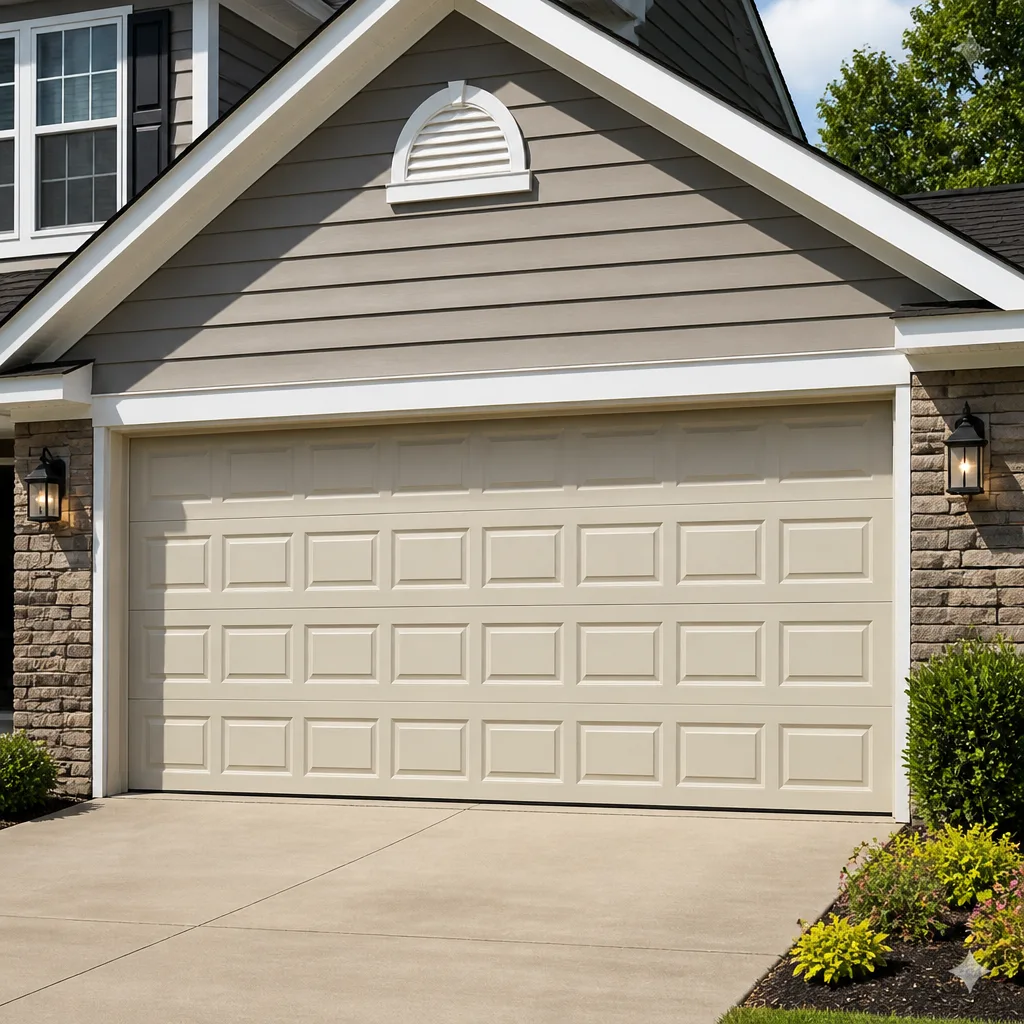 Raised-panel steel
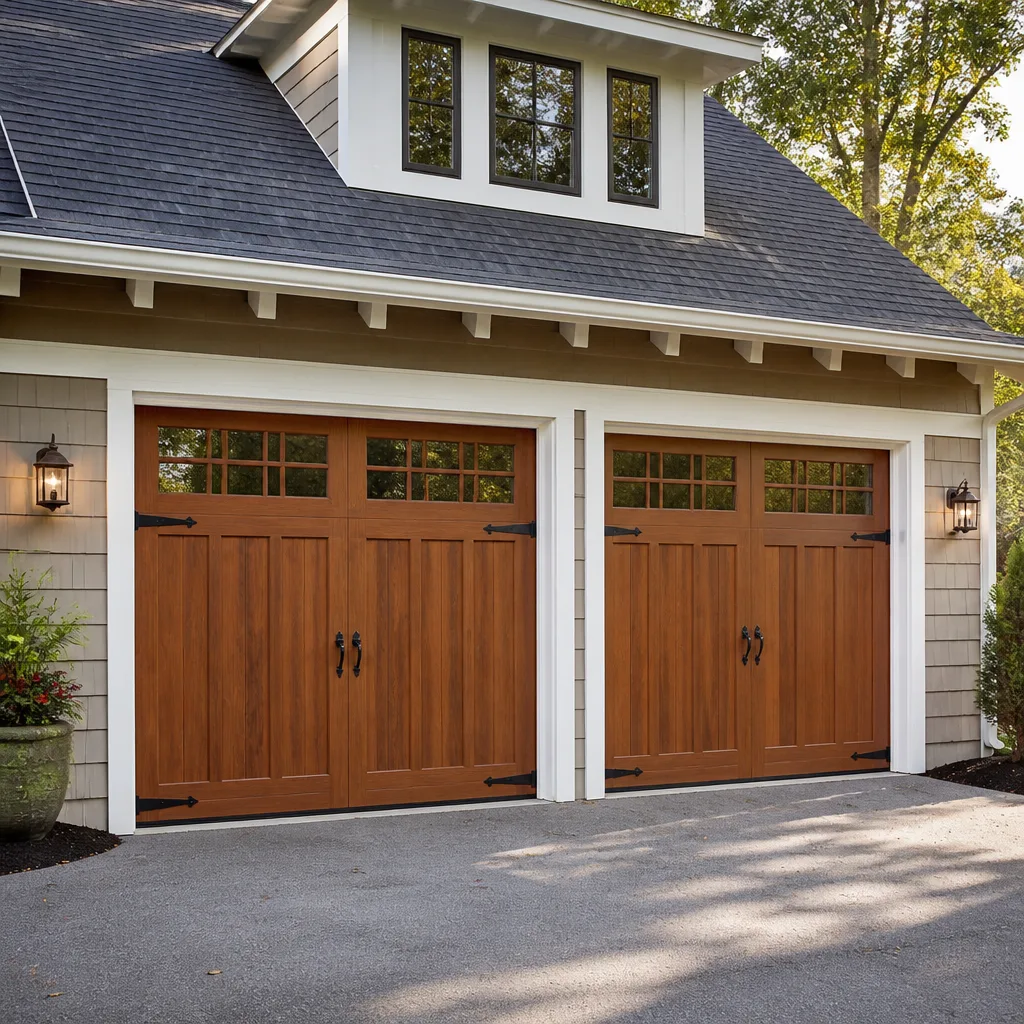 Carriage house
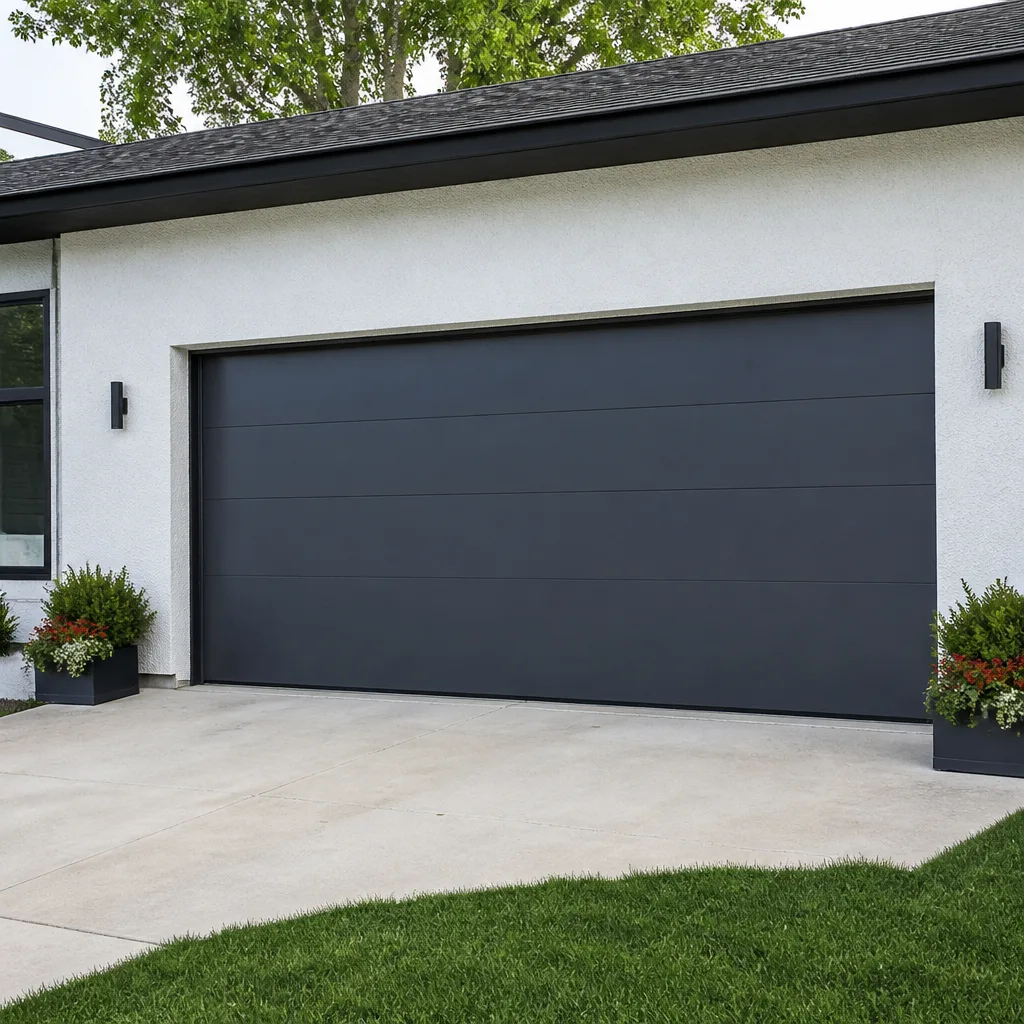 Modern flush
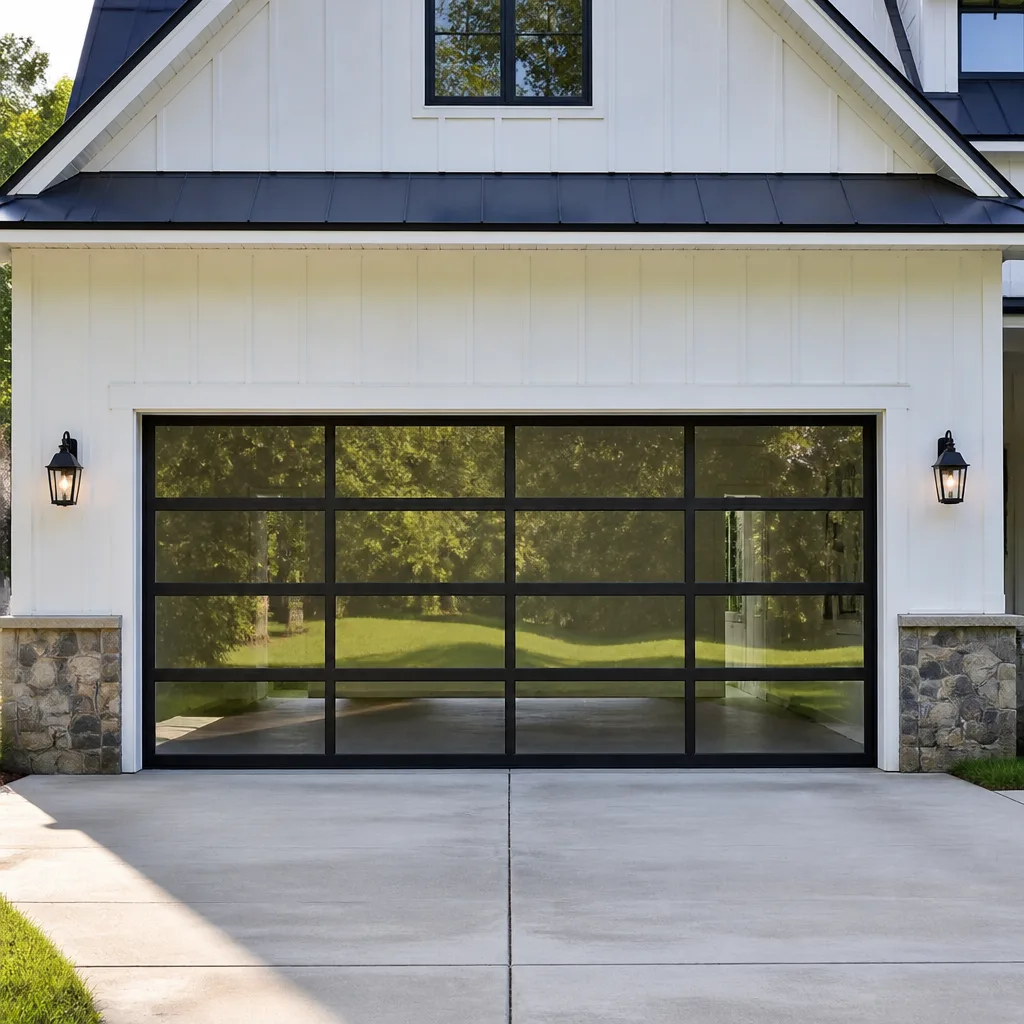 Full-view glass
 LiftMaster openers
 Chamberlain openers
Full 25-point door and opener safety check with every visit - springs, cables, rollers, tracks, and your LiftMaster or Chamberlain opener included
You get a price before we start. It does not change when the pro arrives.
Get your free estimateGarage Door Warning Signs: A Suffolk Homeowner’s Reference Guide
A door that takes two seconds longer to open than it did last month isn’t “getting old.” It’s telling you exactly which component is failing, if you know what to listen for. Most garage door failures send clear signals days or weeks before they strand a car or leave a house open to the street, and the difference between catching those signals early and ignoring them is often the difference between a straightforward repair and an emergency call. This guide walks through the warning signs by symptom rather than by part name, so you can recognize what your door is telling you. We’ve written it for Suffolk homeowners who depend on their door every day.
Quick Answer
Garage door warning signs fall into three groups: sounds (grinding, popping, rattling), movement changes (sluggish opening, jerking, reversing), and visible damage (sagging panels, frayed cables, gaps at the floor). Grinding and jerking usually point to springs or rollers, popping often means a torsion spring is about to fail, and a door that reverses or stops halfway is typically an opener or sensor problem. Anything involving a broken spring, a frayed cable, or a door hanging off its track is a safety risk that needs a trained technician, not a weekend project.
Styles & brands we work with
- Raised-panel steel
- Carriage house
- Modern flush
- Full-view glass
- LiftMaster openers
- Chamberlain openers
Table of Contents
- The Symptom-to-Cause Reference Table
- How Suffolk Humidity Changes What “Normal” Looks and Sounds Like
- The Three Warning Signs That Always Precede a Torsion Spring Failure
- Immediate Safety Risks vs. Signs You Can Schedule
- Reading Opener Error Codes Without Calling a Technician First
- Movement and Alignment Warning Signs
- Opener Warning Signs: Remote, Motor, and Logic Board
- A Seasonal Walk-Around Checklist for Suffolk Homes
The Symptom-to-Cause Reference Table
The fastest way to understand a failing door is to match what you see and hear to the part most likely responsible. You don’t need to know the name of the component to describe the symptom, and describing it accurately is half the work. Here’s how the common signals map to causes.
- Loud bang from above the door, door won’t lift: broken torsion spring. The most serious signal on this list. Stop using the door.
- Grinding or scraping as the door moves: worn rollers, dry hinges, or a track that’s out of alignment.
- Jerking or lurching on the way up: a spring losing tension or a cable that’s slipping.
- Door opens a foot then reverses: safety sensor obstruction, misalignment, or a limit setting in the opener.
- Rattling that gets worse over weeks: loose bolts, worn nylon rollers, or a loosening spring anchor.
- Visible gap between the door and the floor: a bent bottom panel, worn weather seal, or a track pulling away from the frame.
- Frayed or kinked cable visible on the side: cable wear. A snapped cable can whip, so keep clear and call a technician.
- Opener runs but door doesn’t move: a broken spring, a disconnected trolley, or a stripped gear inside the opener.
Notice that several symptoms point to more than one cause. That overlap is why a hands-on look matters. A door that reverses could be a twenty-dollar sensor fix or a sign the opener’s travel limits have drifted, and the only way to know is to inspect it. Reading the symptom correctly saves you from guessing at parts.
How Suffolk Humidity Changes What “Normal” Looks and Sounds Like
Suffolk sits in a humid, four-season climate with hot summers and damp stretches through much of the year. That matters for garage doors because wood, steel, and the hardware that holds them together all respond to moisture. A door that sounds a little different in July than it did in March isn’t necessarily failing. Knowing what’s seasonal and what’s a genuine problem keeps you from either overreacting or missing something real.
In summer humidity, wood door panels swell slightly. That swelling can make a door bind in its frame or rub where it didn’t before, and you may hear a light scraping that disappears when the air dries out. Steel doors don’t swell, but the hinges and rollers still pick up moisture, and a door that sat through a damp spring can develop squeaks and stiffness that a little lubrication resolves. If a sound only appears during humid weeks and vanishes in dry weather, it’s usually seasonal friction, not a failing part.
Winter brings the opposite. Cold makes metal contract and lubricants thicken, so doors can sound louder and move more slowly on a cold morning. That sluggishness is normal up to a point. What isn’t normal is a door that jerks, stalls, or needs two presses of the remote every time. That’s a spring or opener issue, not the weather.
One more Suffolk-specific point: pollen and grit. Spring pollen coats tracks and rollers, and grit works its way into the hinges. A door that starts grinding in April after a clean winter often just needs its tracks wiped and hardware lubricated. If you clean and lubricate and the grinding continues, that’s when it’s worth a professional look.
The Three Warning Signs That Always Precede a Torsion Spring Failure
Torsion springs rarely snap without notice. In our experience, they give three signals first, and the lead time is usually measured in days to a few weeks, not months. Catching them turns an emergency into a scheduled repair, and it keeps you from being stuck with a car trapped inside a closed garage.
- The door feels heavier than it used to. Disconnect the opener (pull the release cord with the door fully closed) and lift the door by hand. A healthy door lifts with modest effort and stays put partway up. A door that feels like dead weight, or drops when you let go, has a spring that’s lost tension. This is the earliest and most reliable warning.
- You hear a popping or creaking from above the door. A torsion spring under load makes a sharp metallic pop or a repeated creak as it winds. That sound is the coil binding. It’s the last warning before a break, so treat it as urgent.
- The door opens unevenly or sags to one side. With two springs, one doing more work than the other shows up as a door that tilts as it rises. If you see this, stop cycling the door and have it looked at.
When a torsion spring does break, the sound is dramatic: a loud bang, then a door that won’t lift. This is the most dangerous moment in a garage door’s life, because a spring under load stores serious energy. Don’t try to open the door by hand, don’t cut or unwind anything, and keep clear until a trained technician handles it. Our garage door spring repair work exists precisely because this job is not a DIY project, and a trained hand is the only safe way to replace a spring.
Immediate Safety Risks vs. Signs You Can Schedule
Not every warning sign is urgent, but some are genuinely dangerous. Sorting them into “stop now” and “book it soon” categories helps you decide how fast to act, and it protects the people and vehicles around the door.
Stop using the door and call a professional if you notice:
- A broken torsion or extension spring, or a door that won’t lift at all.
- A frayed, kinked, or snapped cable. Cables are under tension and can whip; never touch one.
- A door off its track, hanging at an angle, or with a panel that’s come loose.
- A door that closes and fails to reverse when something blocks it. The safety reverse is a life-safety feature, and a door that ignores it can injure a person or pet.
- Any grinding or scraping that comes with the door visibly binding.
You can schedule these within a normal visit:
- Squeaks, rattles, and light grinding that respond to lubrication.
- A slow or sluggish opener that still moves the door reliably.
- Worn weather seals that let in drafts or water.
- A remote that needs replacing, or a keypad that’s stopped responding.
- A single noisy roller or hinge.
The dividing line is energy. Springs and cables store force, and anything that involves them is a stop-now situation. Noise and wear that don’t involve stored energy can wait for a scheduled visit. When a door is stuck open and the house is exposed, our garage door repair service can get it back in working order.
Reading Opener Error Codes Without Calling a Technician First
Many openers flash a diagnostic code through their LED or display when something’s wrong. The trick is knowing which category a code falls into, because that tells you whether the fix is something you can check or a job for a technician.
- Sensor faults. These are the most common codes. They show up when the safety sensors at the bottom of the door are misaligned, blocked by dirt or a cobweb, or have a loose wire. Before calling anyone, check that the small lights on each sensor are lit and steady. Wipe the lenses, and look that nothing is leaning against a sensor. If the lights blink or stay dark, that’s a sensor problem.
- Motor and travel faults. Codes that indicate the opener strained, hit a limit, or stopped mid-travel point to the motor or the door’s balance. If the door feels heavy by hand, the opener may be telling you the door is the problem, not the opener. If the door is easy to move by hand and the opener still faults, the opener itself needs attention.
- Logic board faults. Codes that persist after a power cycle, or that appear alongside dead remotes and a dead keypad, usually point to the circuit board. This is a technician job; there’s nothing a homeowner can safely do inside an opener housing.
Two cautions. First, error codes only tell you the category, not the exact fix, so don’t buy a board or a motor based on a code alone. Second, the opener is electrical equipment. If you smell burning, see scorch marks, or the unit won’t power on, stop and call a professional. Our garage door opener repair technicians work with the major opener brands, from modern smart systems to older units, and can match a code to the right repair.
Movement and Alignment Warning Signs
Movement tells you a lot about a door’s health. A door that runs smoothly has balance, aligned tracks, and springs doing their job. When any of those go off, the movement changes in ways you can spot.
A door that jerks or stutters on the way up is usually fighting a spring that’s losing tension or a cable that’s slipping. Stuttering worsens over time, so a door that does it now and then will do it more often later.
A door that starts to open then reverses is often a sensor issue, but if the sensors are clean and aligned and the reversal continues, check the opener’s travel limits. Limits drift with age, and the opener can decide the door has reached the top when it hasn’t.
A door that sags in the middle or along one side can mean a bent panel, a broken hinge, or a track pulling out of alignment. Look at the gap between the door and the floor. A gap that’s wider on one side than the other is a sign the door is racking.
A visible gap across the bottom is usually a worn weather seal, but if the seal is fine and there’s still light coming through, the bottom panel may be bent or the door may be sitting unevenly on its tracks. A seal is a minor fix; a bent panel or misaligned track is a technician job, because forcing a door back into a bent track can damage panels further.
If you’re not sure whether your door’s movement is normal, try the hand-lift test described in the spring section. It takes two minutes and tells you a lot about balance. When something doesn’t feel right, a professional look is the safe call.
Opener Warning Signs: Remote, Motor, and Logic Board
The opener has its own set of warning signs, and they’re easy to misread because several problems feel alike from the driver’s seat. A remote that only works up close, a motor that hums without moving the door, and a wall unit that’s gone dark point to different components.
- Remote works only up close or intermittently: usually a battery, a worn remote, or interference. Rule out the battery first, then the remote. If a fresh remote solves it, the opener is fine.
- Opener hums but door doesn’t move: often a stripped gear inside the opener, or a spring that’s broken so the opener can’t lift the weight. Do the hand-lift test to tell which.
- Opener runs and stops partway: frequently a limit or force setting that needs adjusting, or a sensor problem.
- Wall control dead but remotes work: usually a wiring issue at the wall unit.
- Everything dead after a power outage: sometimes a logic board. This one is a technician call.
LiftMaster and Chamberlain openers, which run the myQ smart-home system, are common in Suffolk homes, and so are older Craftsman and Genie units. The diagnostic approach is the same: rule out the simple things (battery, sensor, power) before assuming the opener needs major work. If the opener does need repair, our technicians work on the brand you already have rather than pushing a replacement.
A Seasonal Walk-Around Checklist for Suffolk Homes
A short inspection a few times a year catches most problems before they turn into failures. Here’s the routine we’d suggest for a Suffolk home, using the same steps our technicians work through.
- Look at the springs. Check for gaps, rust, or a visible break. If you see any, stop here and call a technician.
- Check the cables. Look at the cables running down each side for fraying or slack. Never touch a cable under tension.
- Do the hand-lift test. Disconnect the opener with the door closed and lift by hand. A well-balanced door moves easily and stays partway up. A heavy or dropping door is a spring warning.
- Wipe and lubricate the tracks and hardware. Clean the tracks, then lubricate the rollers, hinges, and spring with a garage-door lubricant. Don’t use grease that attracts grit.
- Test the safety reverse. Place a piece of wood on the floor in the door’s path and close the door. It should reverse on contact. If it doesn’t, have it adjusted.
- Check the bottom seal and the gap. Replace a worn seal, and note any uneven gap.
- Run the door and listen. Grinding, rattling, or popping means something needs attention. Note when it happens so you can describe it.
- Test the remotes and keypad. Replace weak batteries and note any remote that’s failing.
This routine takes fifteen minutes and catches most issues early. Repeat it when the season changes, since Suffolk’s humidity swings are hard on hardware.
Common Mistakes to Avoid
- Trying to fix a spring yourself. Torsion springs store enough energy to cause serious injury when they release. Leave spring work to a trained technician; it’s the single most dangerous repair on a garage door.
- Ignoring a single pop or creak. A popping spring is a warning, and waiting for the bang means the door fails when you need it. Treat the noise as urgent.
- Stepping over a door that won’t reverse. The safety reverse is a life-safety feature. A door that ignores an obstruction can hurt a child or pet, so have it fixed before the next cycle.
- Forcing a door that’s off its track. Forcing it back can bend panels or damage the opener. Stop and call a professional.
- Lubricating with the wrong product. Heavy grease collects grit and makes grinding worse, especially with Suffolk’s pollen and dust. Use a garage-door lubricant and wipe the tracks clean.
- Replacing the opener when the door is the problem. A heavy door with a broken spring will strain any opener. Fix the door’s balance first.
- Assuming seasonal stiffness means failure. A door that’s stiff on a cold morning but fine later in the day is often just the weather. If stiffness turns into jerking or stalling, that’s when to call.
See the difference
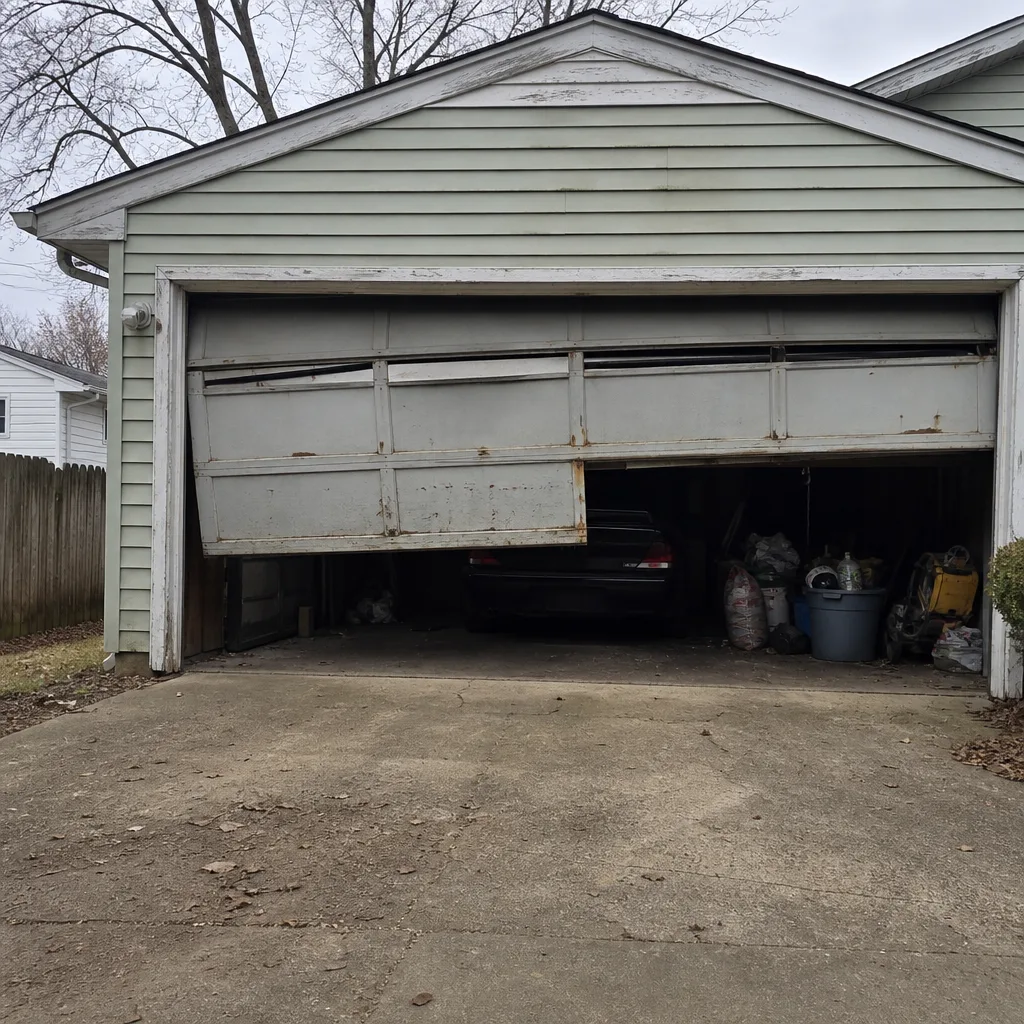 Before
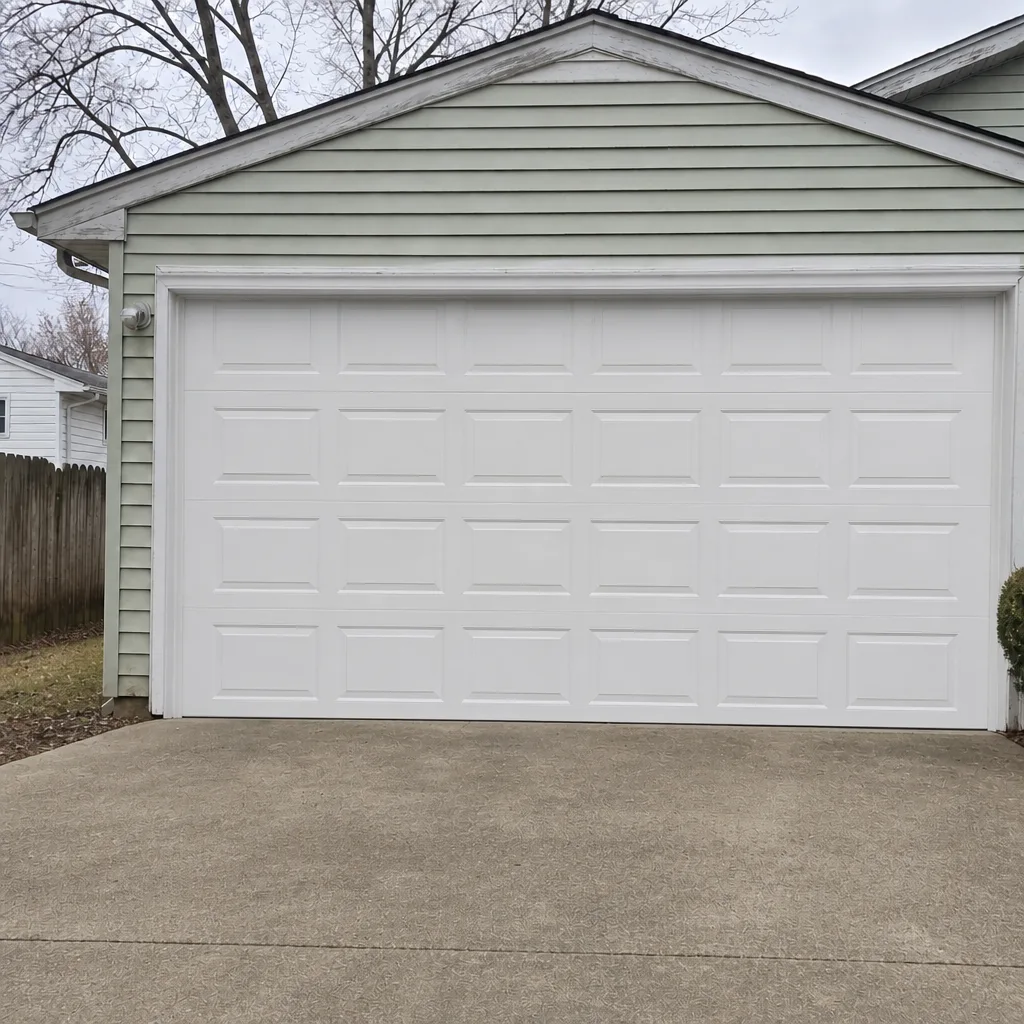 After
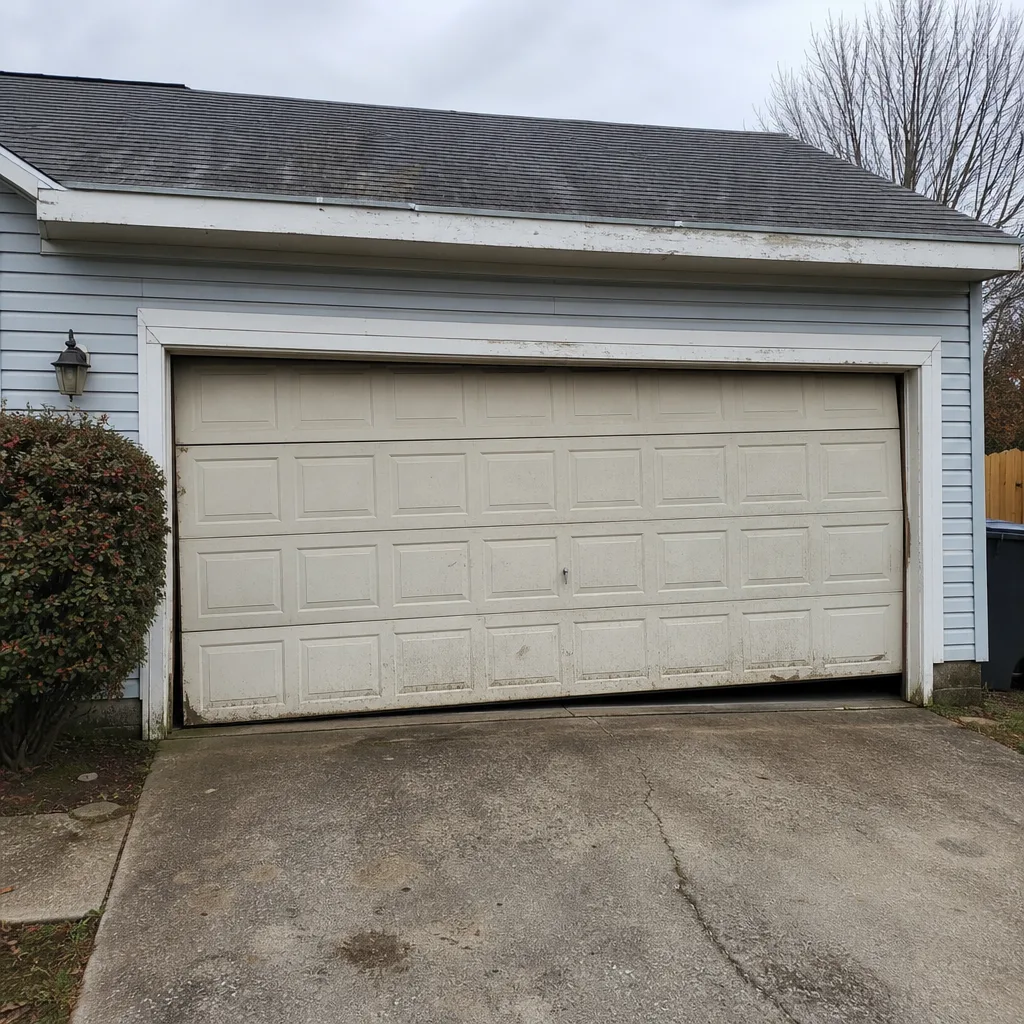 Before
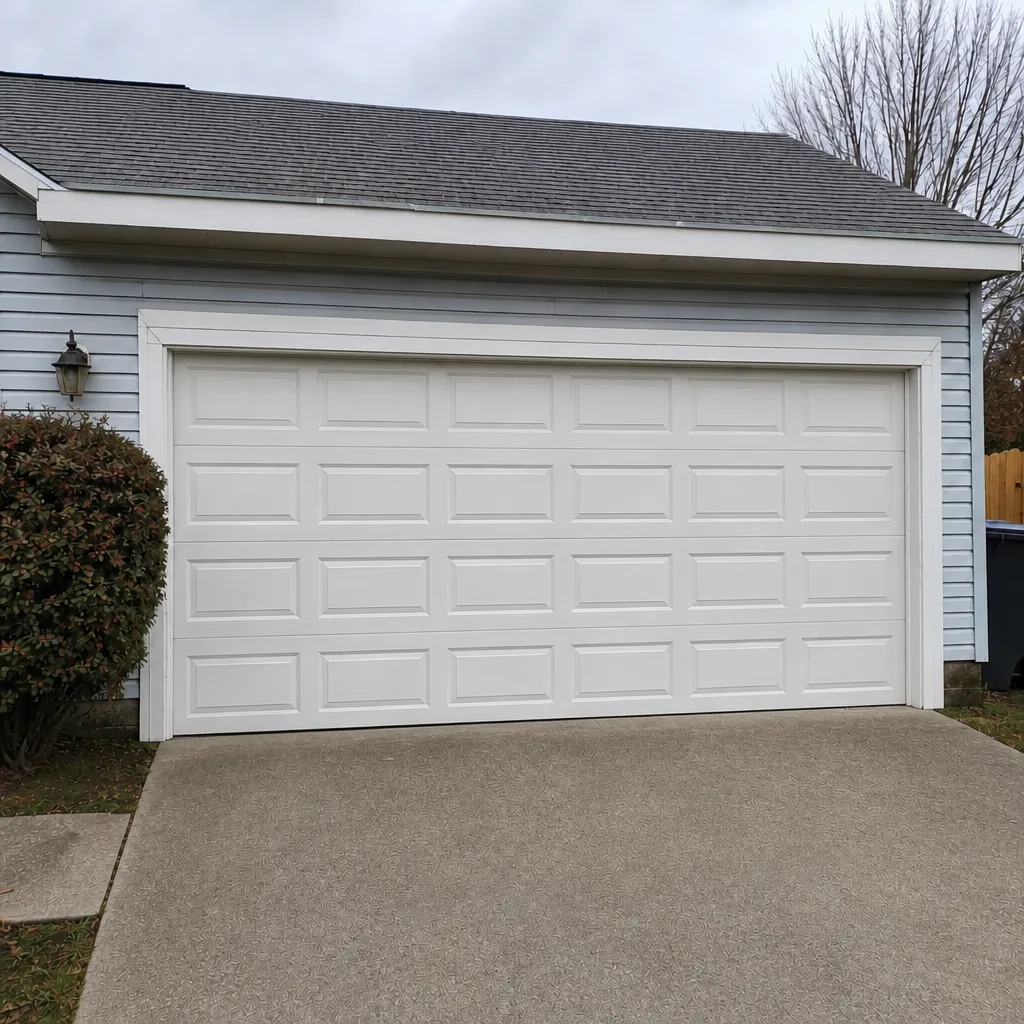 After
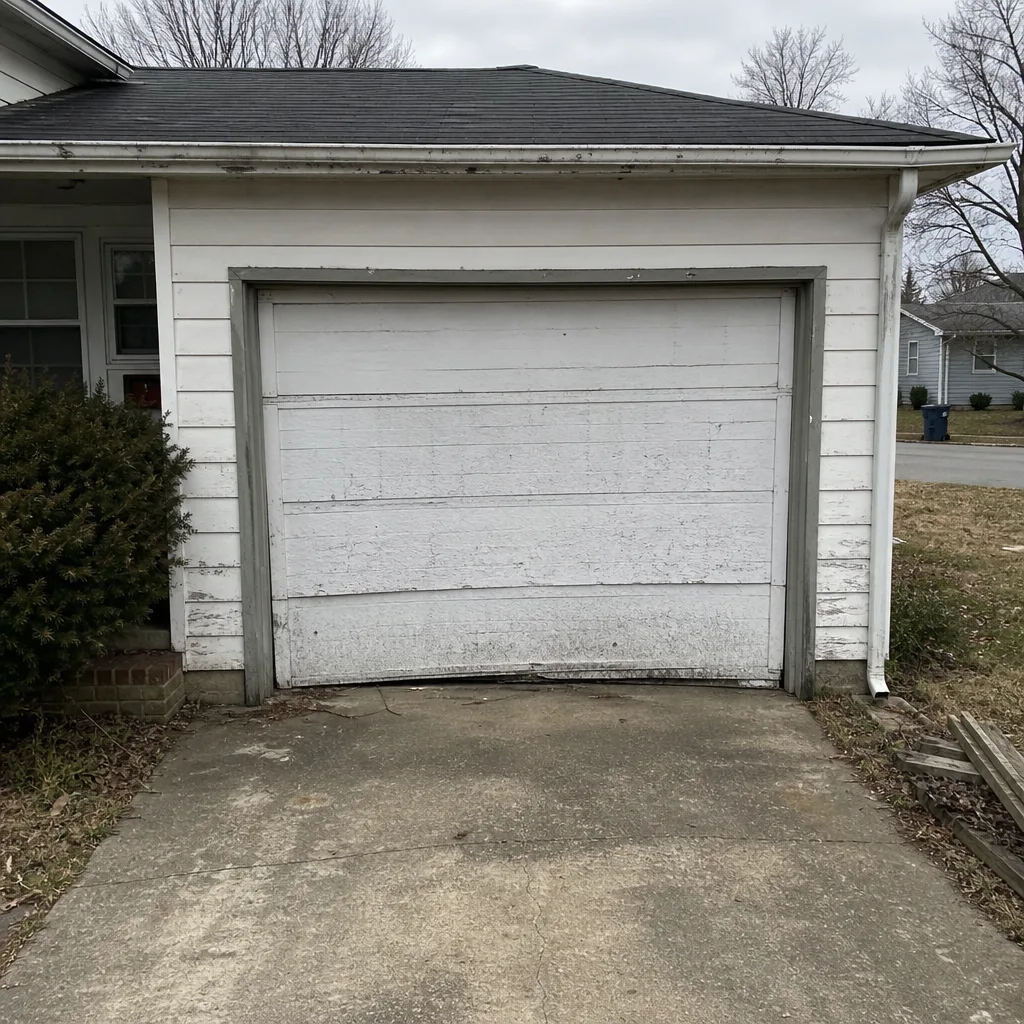 Before
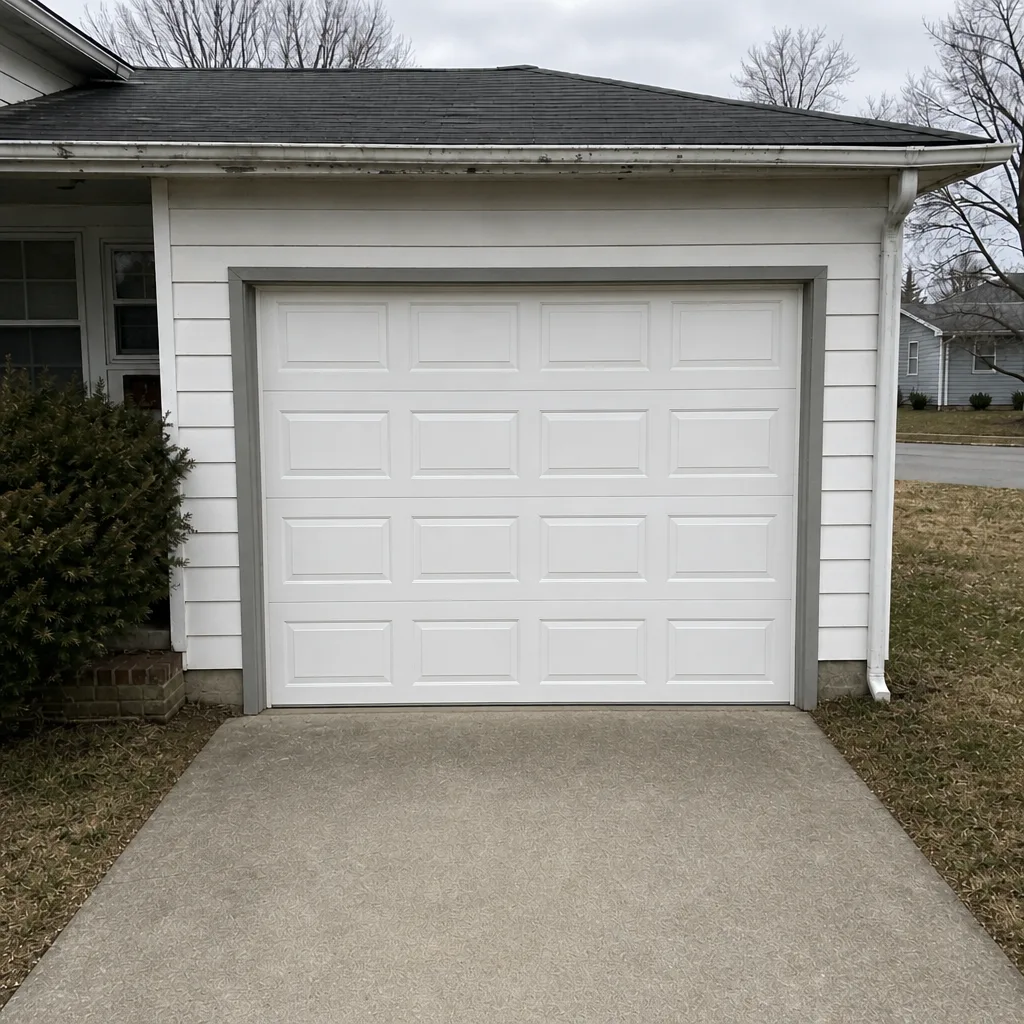 After
When to Call a Professional
Call a professional if you find a broken spring, a frayed or snapped cable, a door off its tracks, a door that won’t reverse, or a door that’s stuck open with the house exposed. Those are the stop-now situations. Also call if a sound or movement problem persists after cleaning and lubricating, if the opener keeps faulting, or if you’re simply unsure whether something is normal. The cost of a look-up is far less than the cost of a failure that catches you with a car trapped inside or a house open to the street.
Suffolk Garage Door Repair Pros offers free estimates in Suffolk – call (855) 894-0378. We answer 24/7. Fast dispatch from 7am to 7pm, Sunday through Friday.
Frequently Asked Questions
The earliest and most reliable sign is a door that feels heavy when you lift it by hand with the opener disconnected. A healthy door lifts with modest effort and stays partway up; a door that feels like dead weight or drops when you let go has a spring that’s losing tension. A popping or creaking from above the door is the last warning before a break.
No. A popping sound from the spring area usually means a torsion spring is about to fail, and cycling the door can trigger the break. Stop using the door and keep clear until a trained technician handles it. A break is sudden and dangerous.
Check the sensor lights first. If the small lights on the safety sensors at the bottom of the door are lit and steady, the sensors are working and the problem is likely the motor or the door’s balance. If the lights blink or are dark, the sensors are the issue. Do the hand-lift test to see if the door is the real problem before blaming the opener.
Humidity makes wood panels swell and lets hardware pick up moisture, which adds friction and noise. A light scraping that only appears in damp weeks and disappears when the air dries is usually seasonal. Wipe the tracks and lubricate the hardware; if noise continues after that, have it checked.
The local professional we connect you with is licensed and insured as their state requires. Our technicians have up to 9 years of experience and work with the major door and opener brands, including LiftMaster, Chamberlain, Craftsman, and Wayne Dalton. Call (855) 894-0378 for a free estimate.
For repair calls, same-day service is often available. We answer 24/7, and fast dispatch runs from 7am to 7pm, Sunday through Friday. Installation and replacement work is measured and scheduled, so those get a free measure and a written price rather than a same-day promise. Call (855) 894-0378 to book.
The Bottom Line
Garage door failures almost always warn you first. Heavy lifting, popping, grinding, jerking, and gaps at the floor are signals, and each one points to a specific cause. Learn to read them by symptom and you’ll catch most problems while they’re still small. Separate the stop-now signs (springs, cables, off-track doors, a failed safety reverse) from the schedule-soon signs (squeaks, worn seals, sleepy openers), and you’ll know how fast to act. Suffolk’s humidity means some seasonal noise is normal, so calibrate to the weather before assuming the worst. When in doubt, call Suffolk Garage Door Repair Pros at (855) 894-0378 for a free estimate. We answer 24/7, and fast dispatch runs from 7am to 7pm, Sunday through Friday.
Written by the team at Suffolk Garage Door Repair Pros.